Software Developer Resume
Best for: Product and software developers
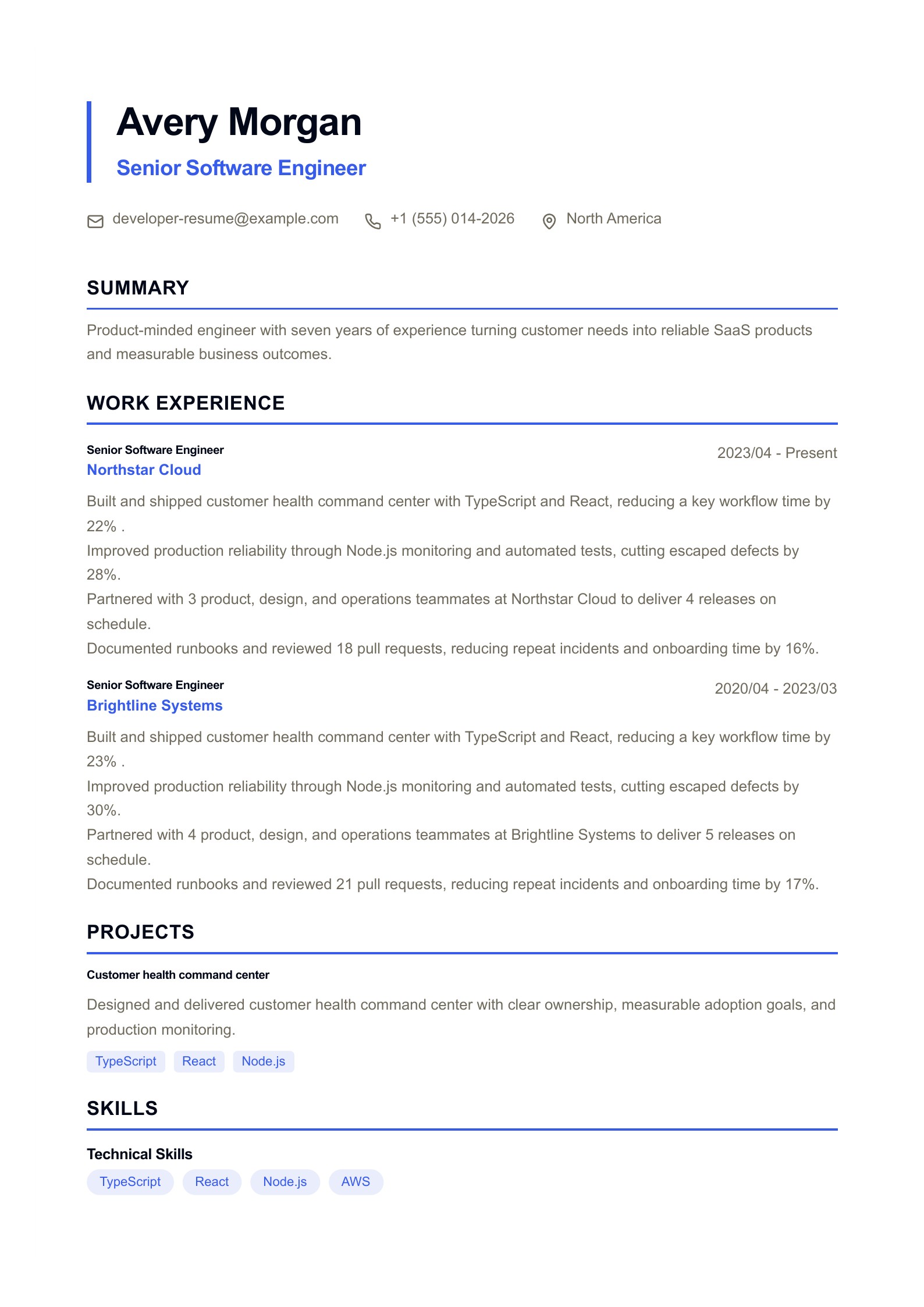
Shows product delivery, performance, and end-to-end collaboration.
Explore 20 English examples featuring technologies, responsibilities, and measurable results.
All people, companies, and metrics are fictional examples for educational use.
Choose an example aligned with your experience, career stage, and technologies.
Best for: Product and software developers
Shows product delivery, performance, and end-to-end collaboration.
Best for: Backend and platform engineering
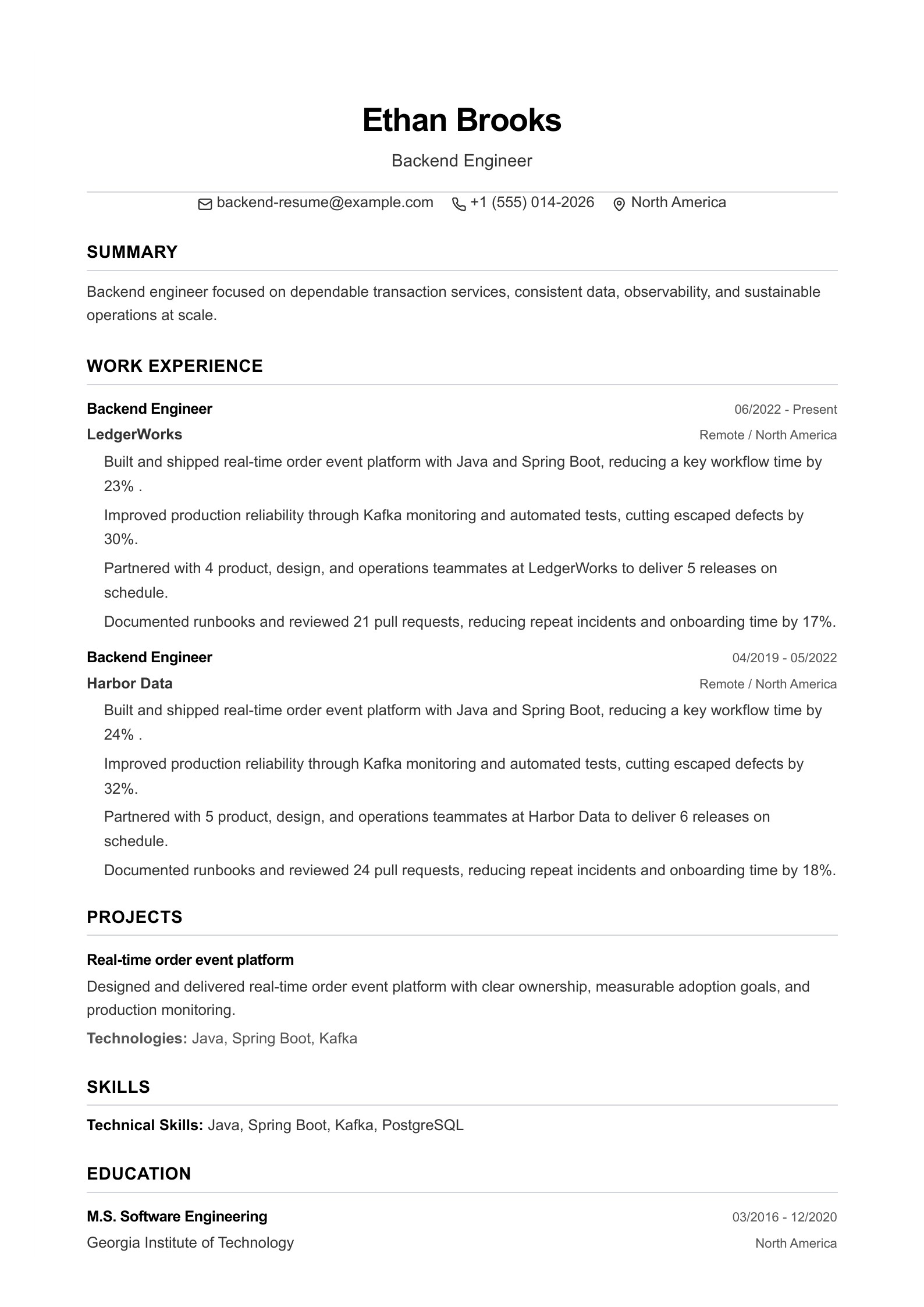
Highlights APIs, data consistency, and reliability for high-traffic platforms.
Best for: Frontend and UI engineering
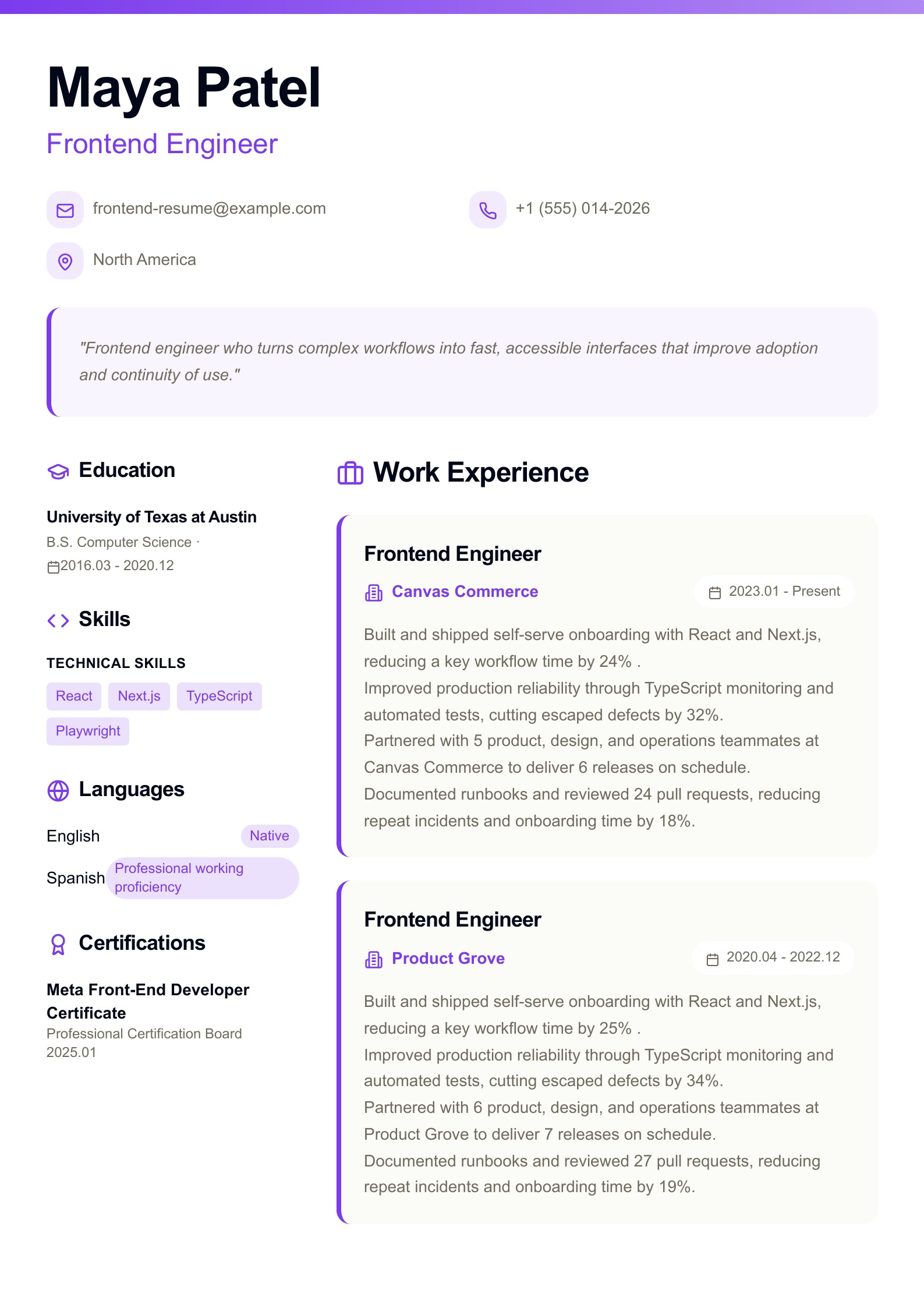
Communicates interface quality, accessibility, and measurable performance outcomes.
Best for: Android and mobile development
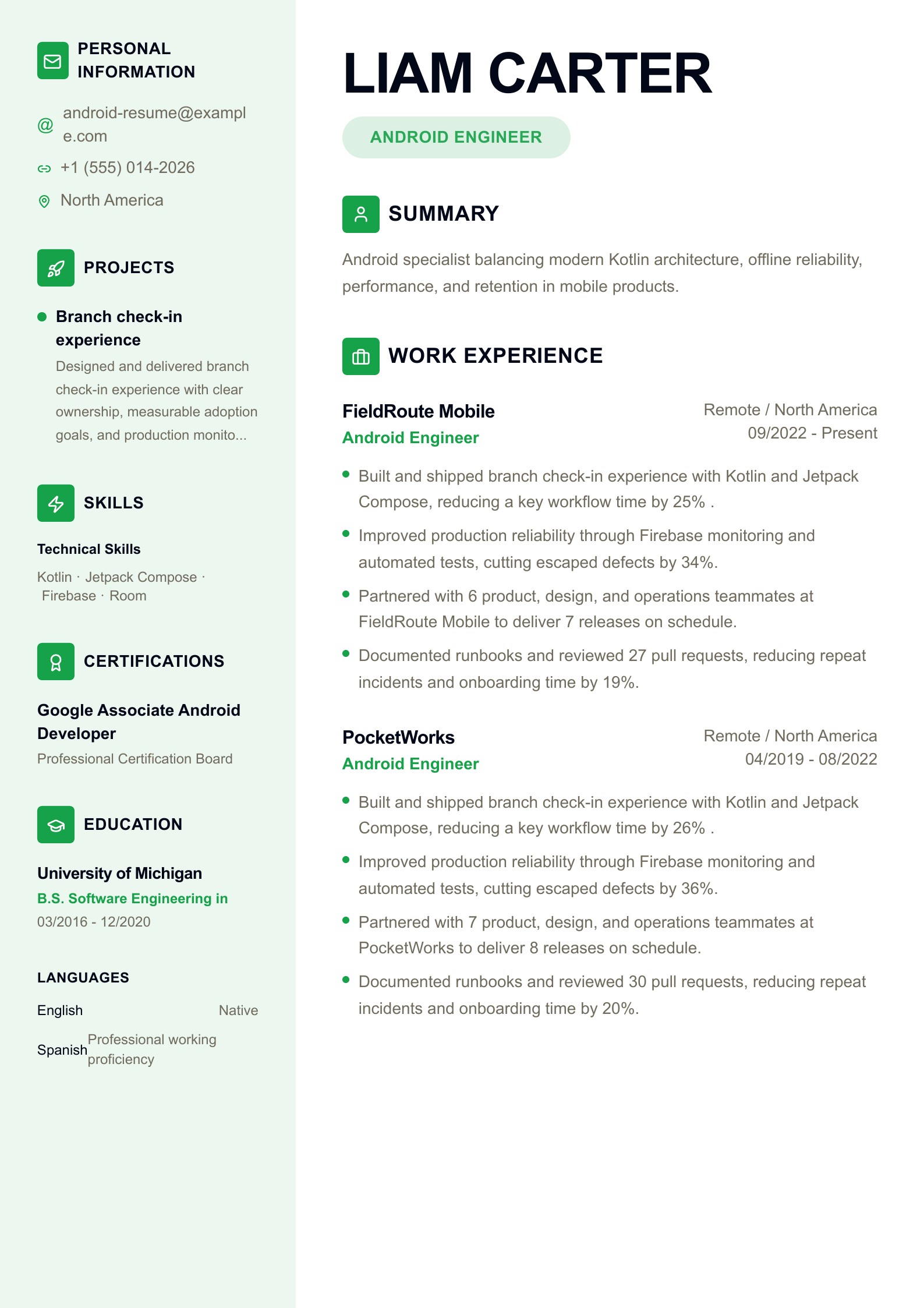
Organizes mobile stability, performance, and user experience results.
Best for: iOS and mobile development
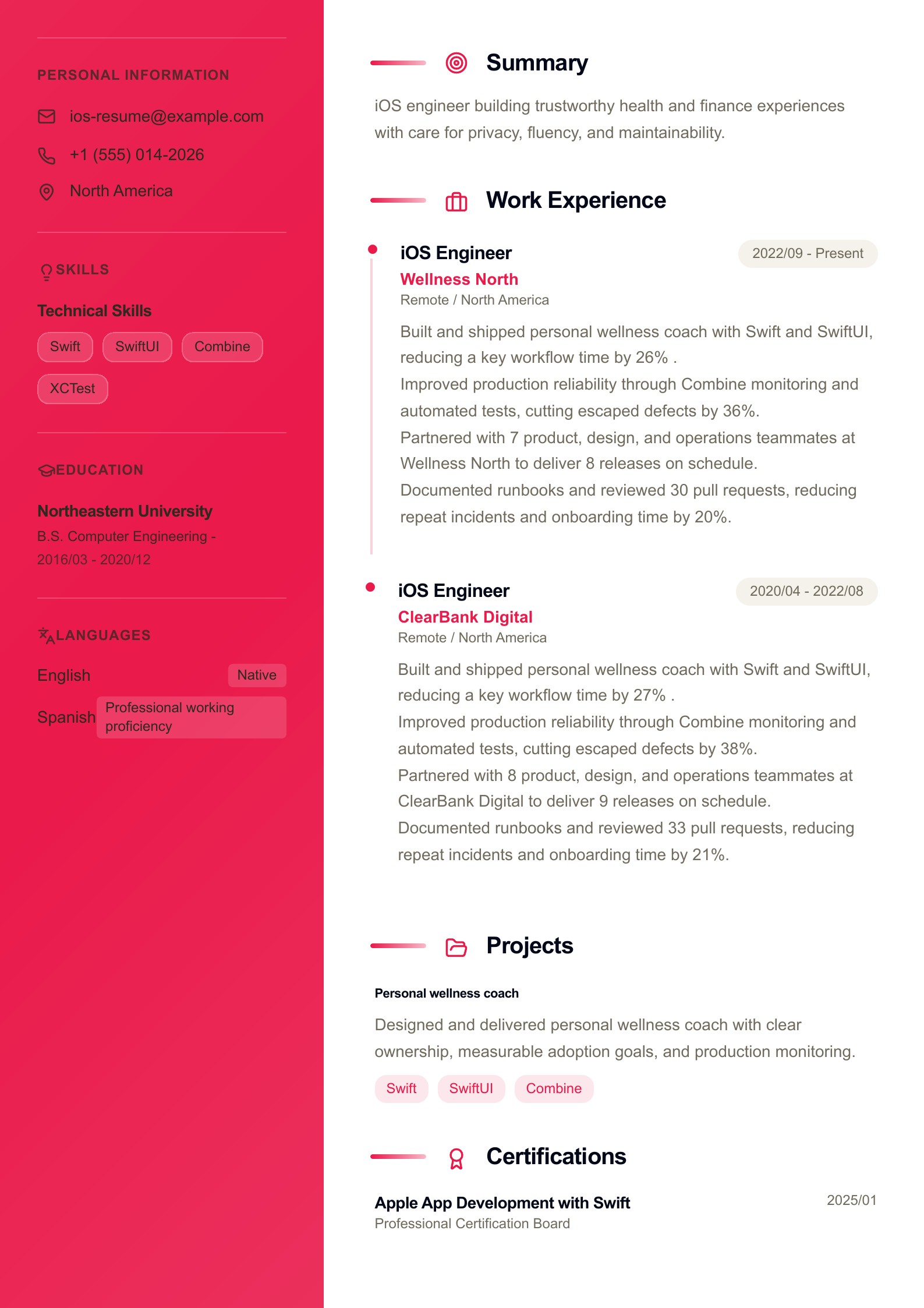
Highlights SwiftUI, quality engineering, and Apple ecosystem integrations.
Best for: Full stack and SaaS teams
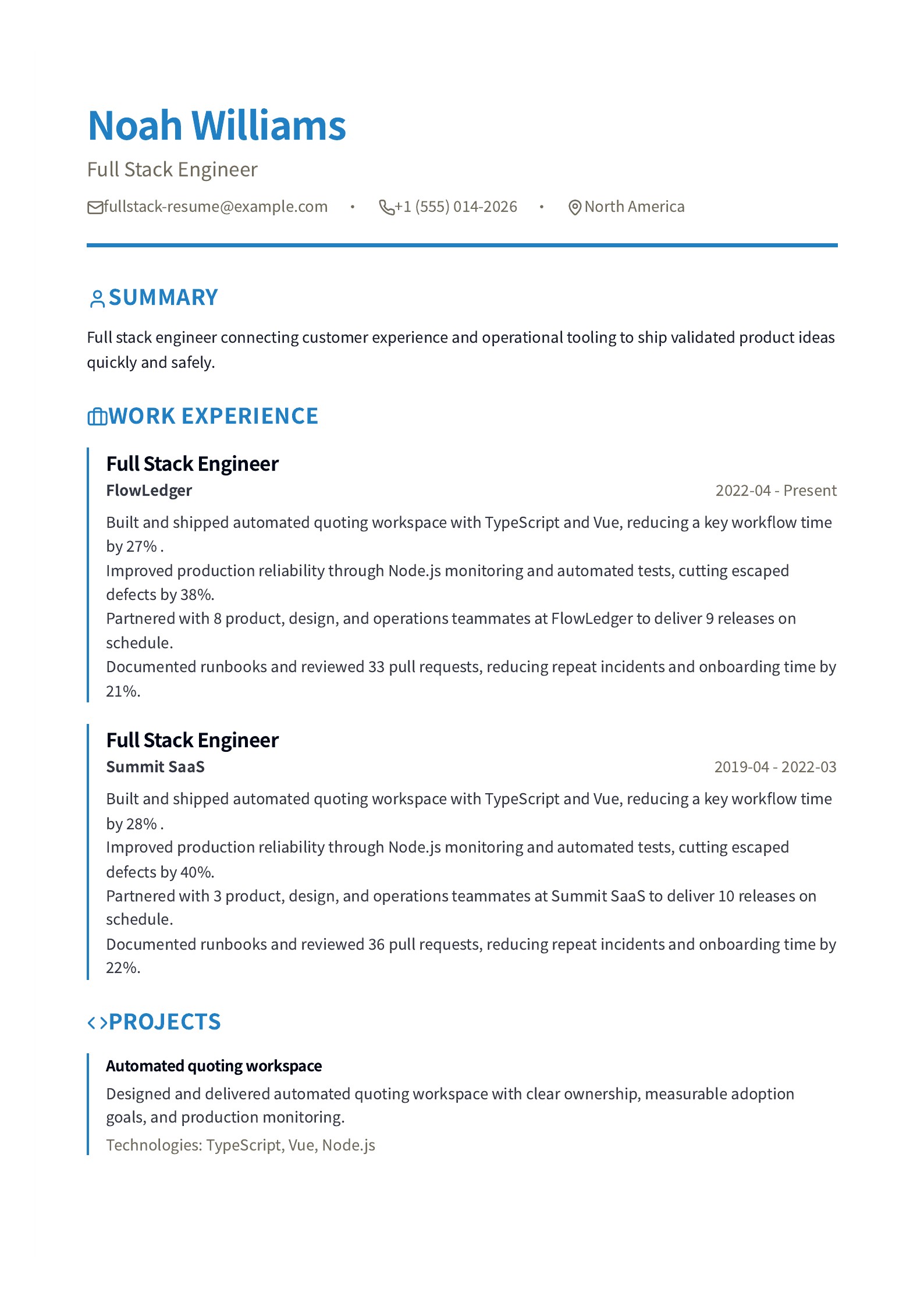
Demonstrates contribution from discovery through production operations.
Best for: Application and product development
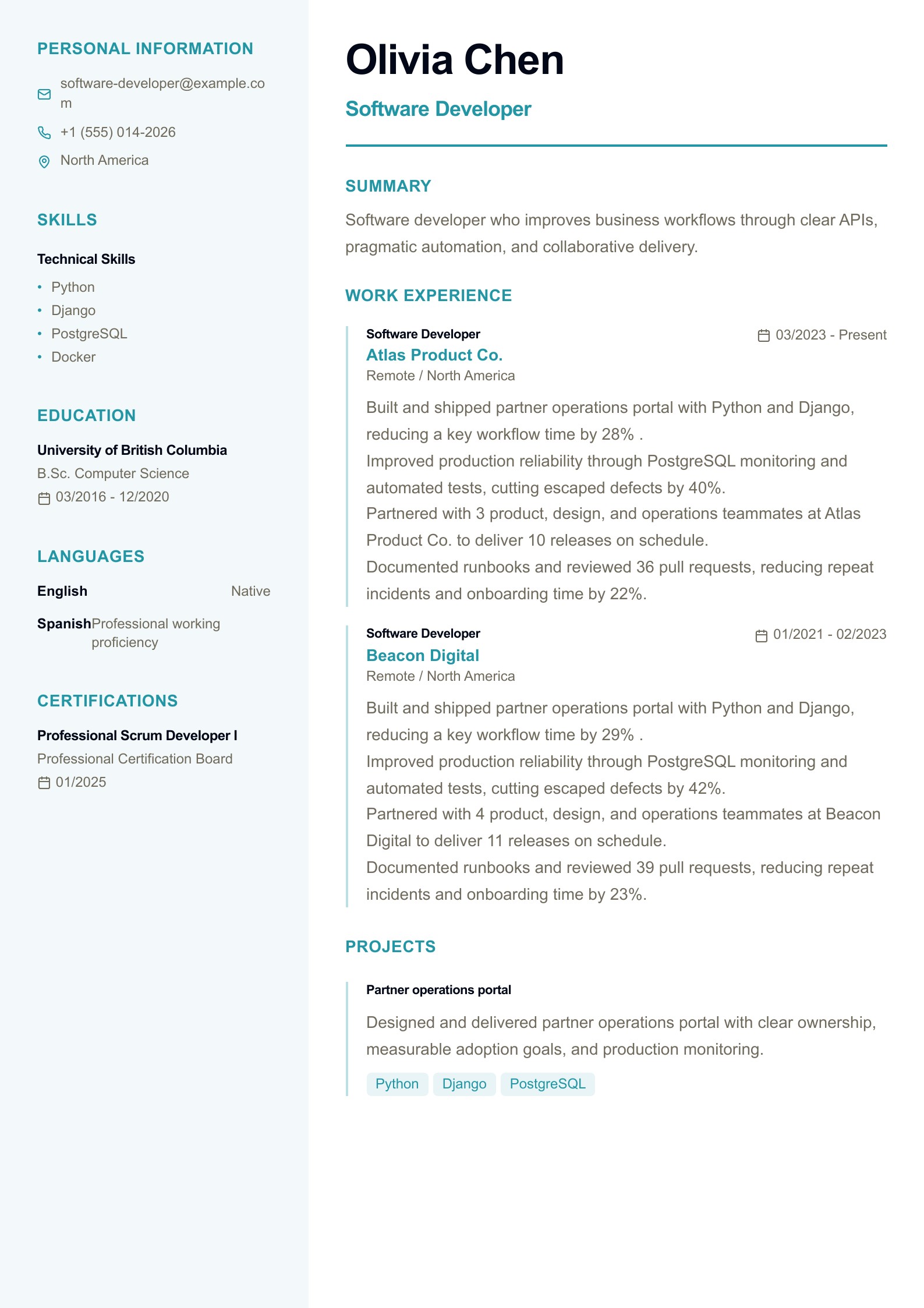
Connects maintainable applications with practical business automation.
Best for: Python and data services
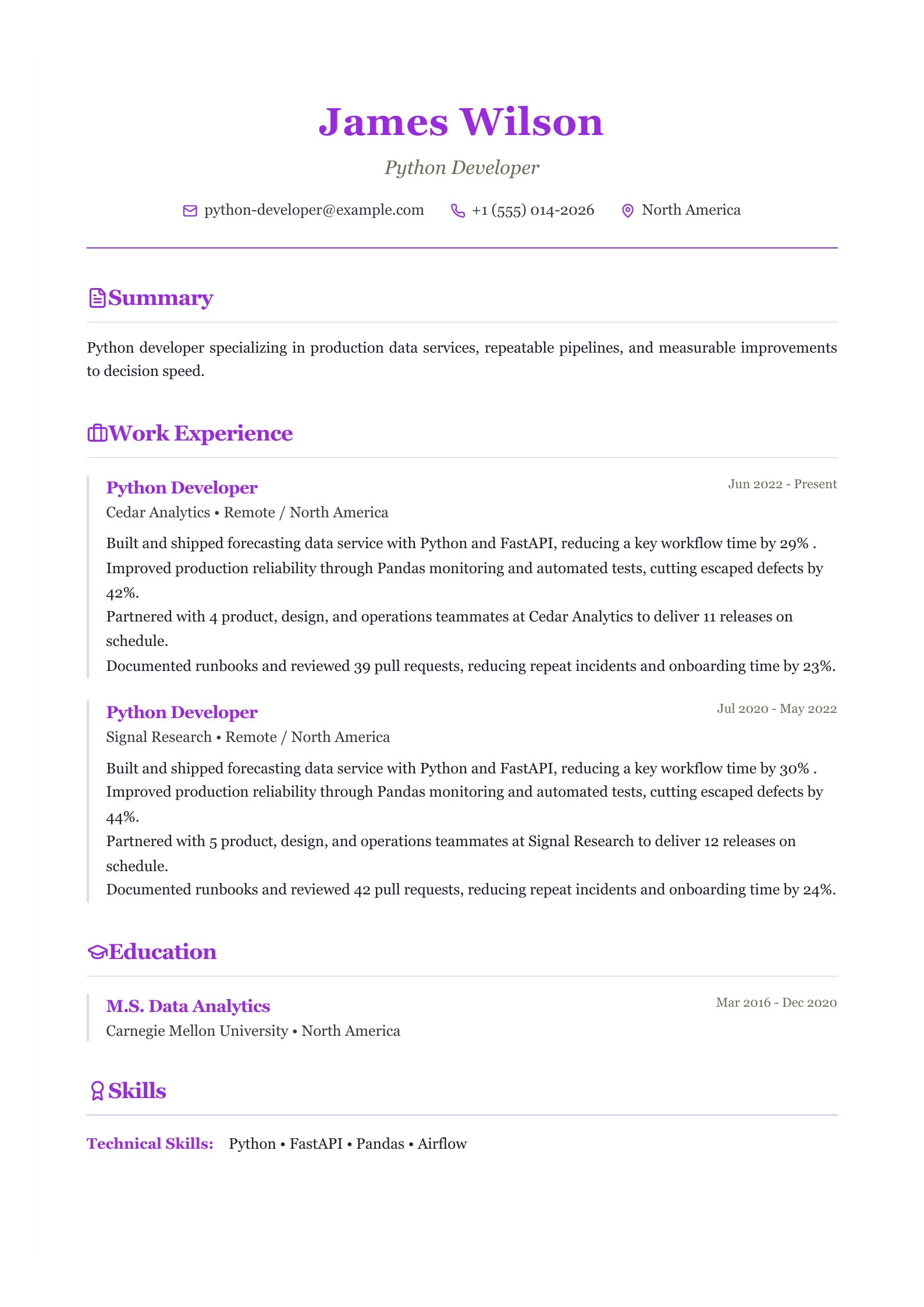
Emphasizes production Python services, pipelines, and data reliability.
Best for: Embedded and firmware engineering
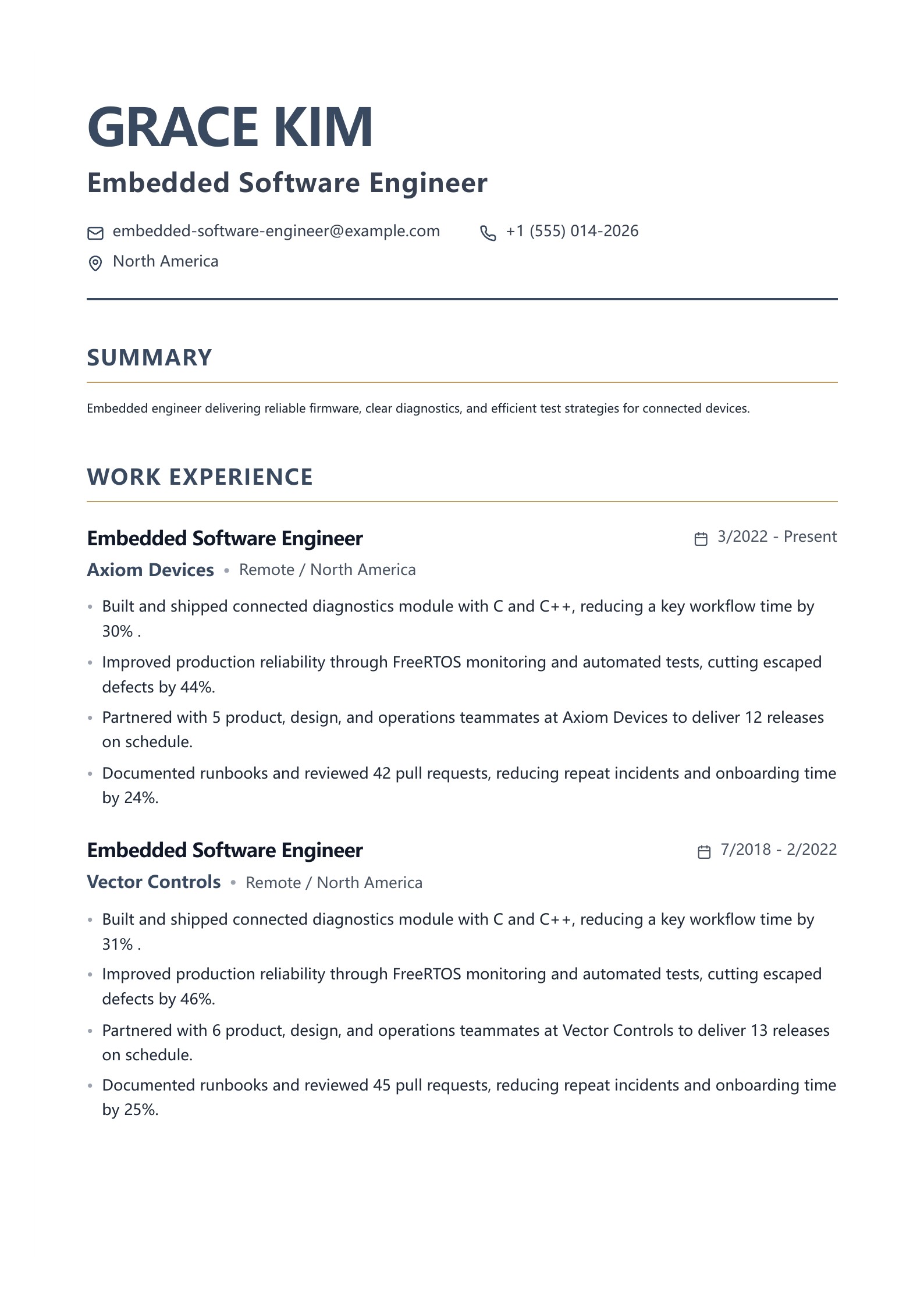
Makes firmware quality, diagnostics, and hardware collaboration visible.
Best for: Java platform engineering
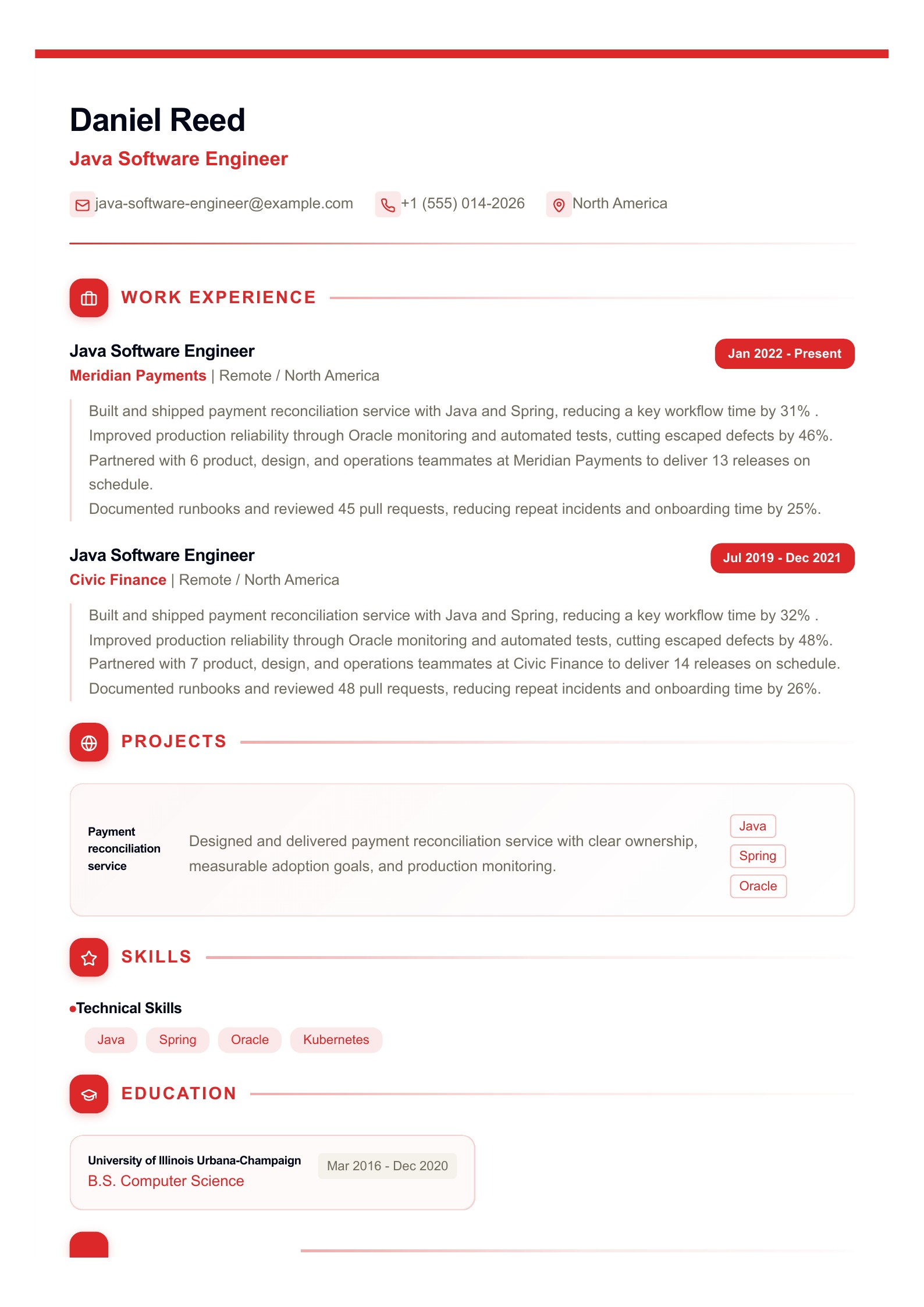
Presents secure Java services and disciplined incident ownership.
Best for: Internships and co-op applications
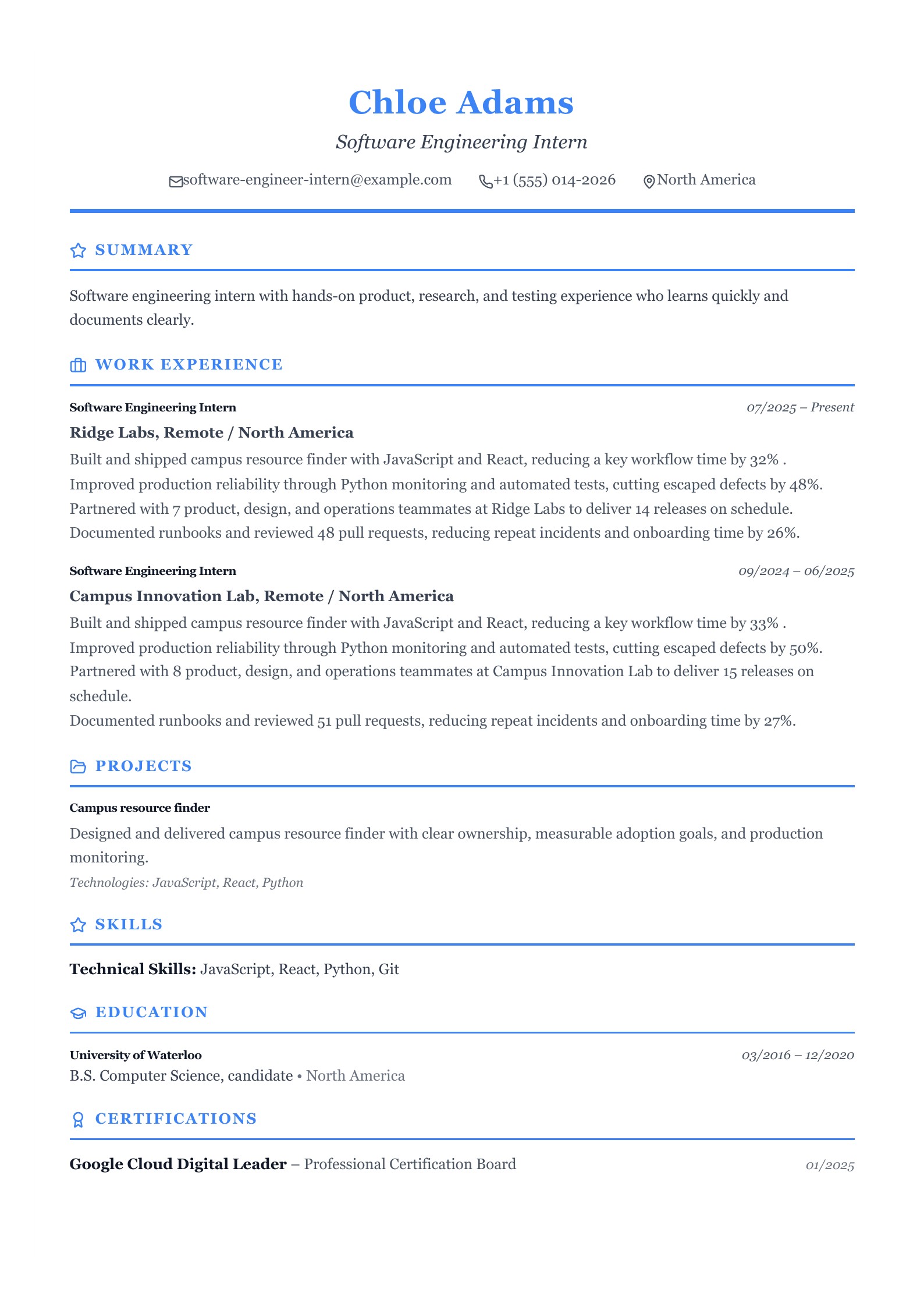
Combines coursework, internships, and measurable early contributions.
Best for: Engineering leadership roles
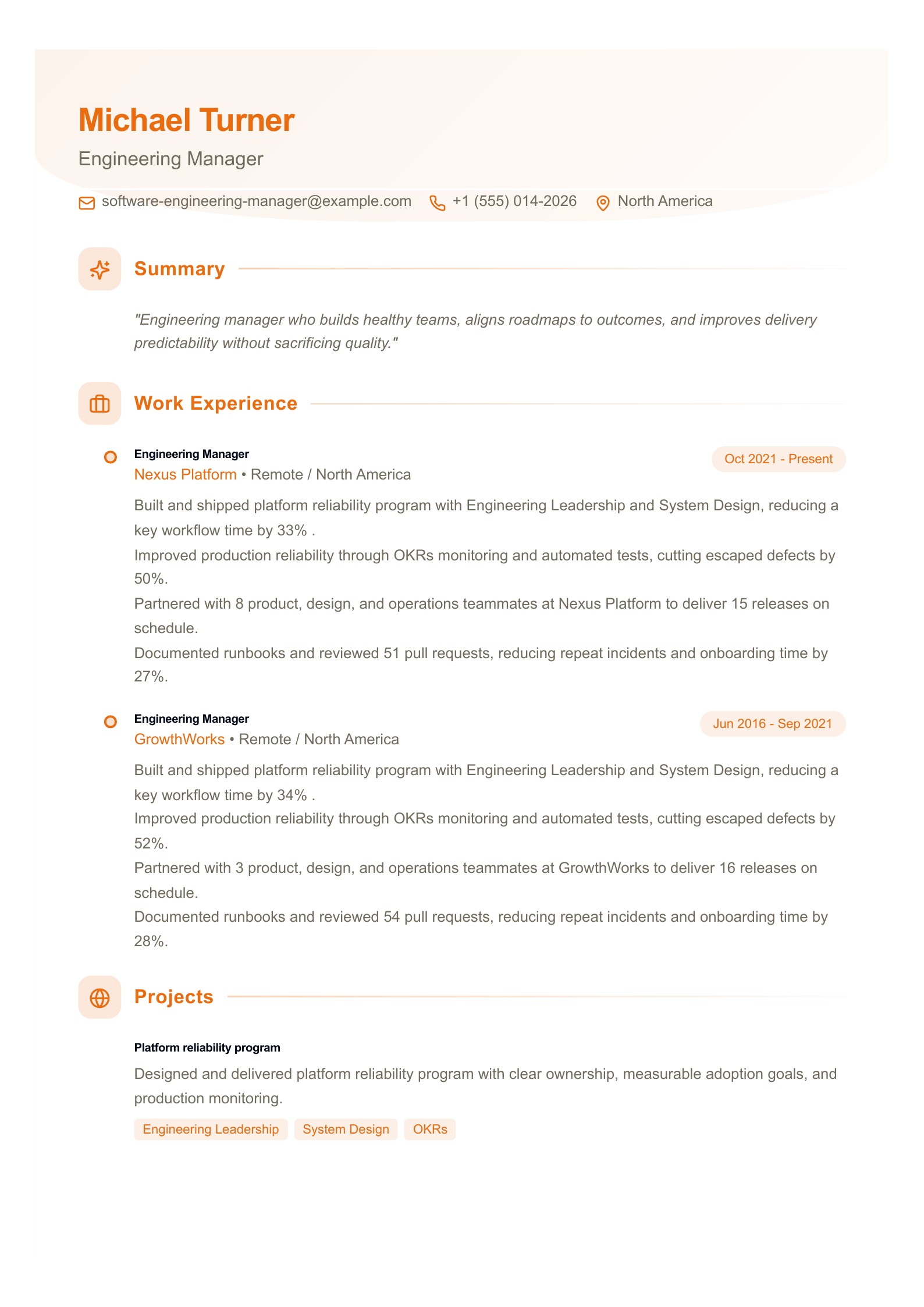
Communicates team health, roadmaps, coaching, and delivery outcomes.
Best for: Engineers with one to three years of experience
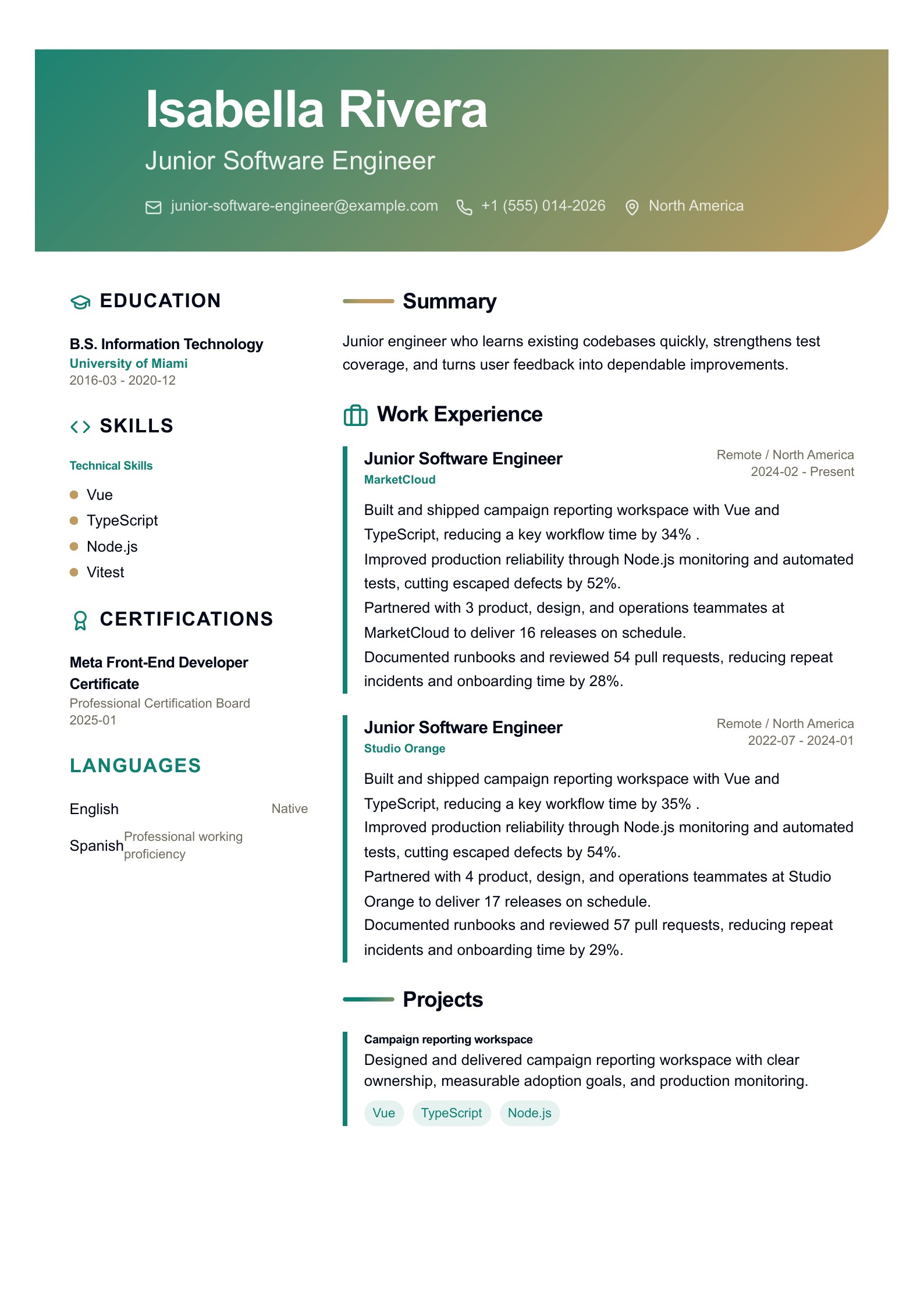
Shows fast learning and practical production contributions.
Best for: Senior engineers with five-plus years
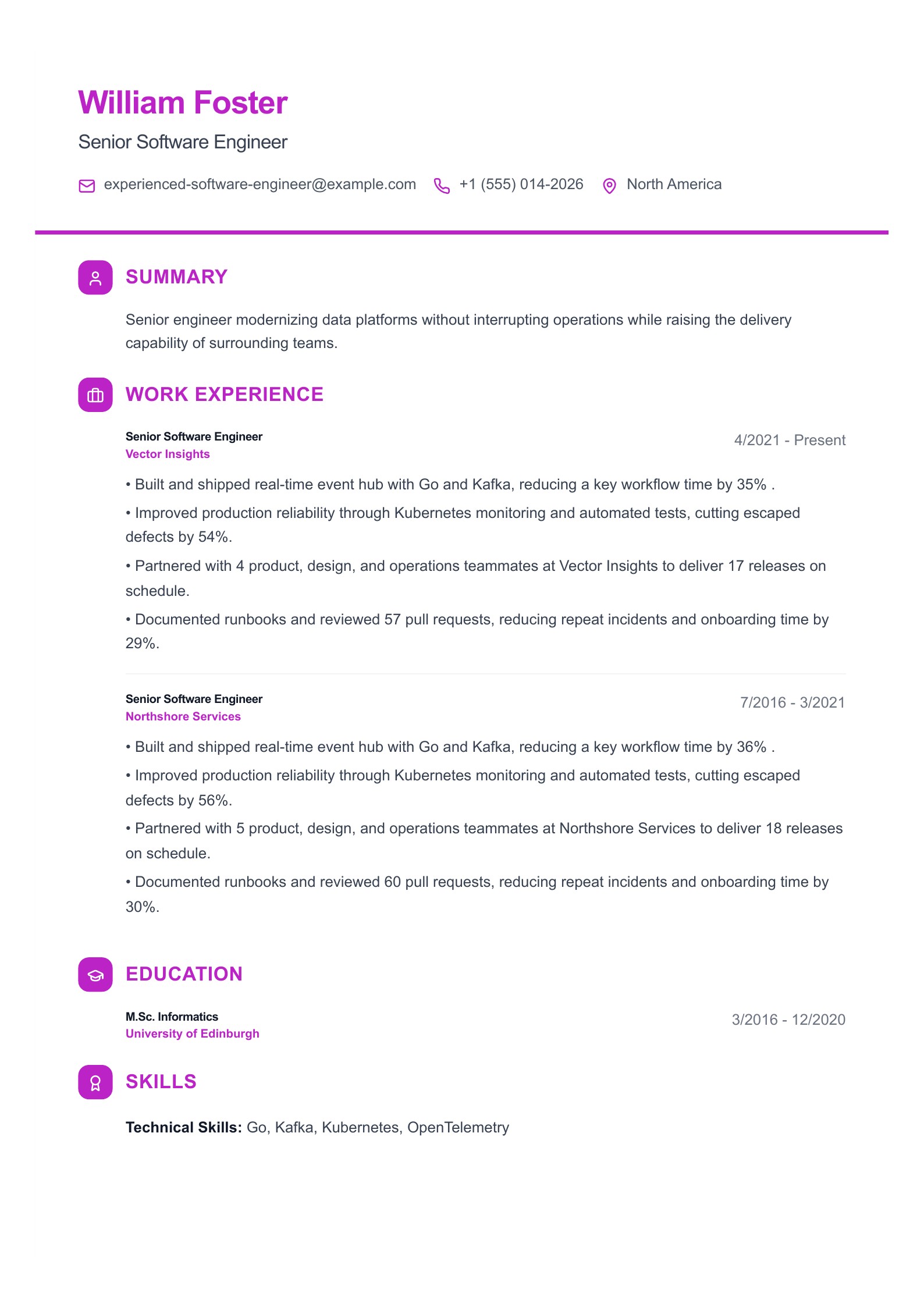
Explains architecture evolution and technical decisions at scale.
Best for: First roles after graduate study
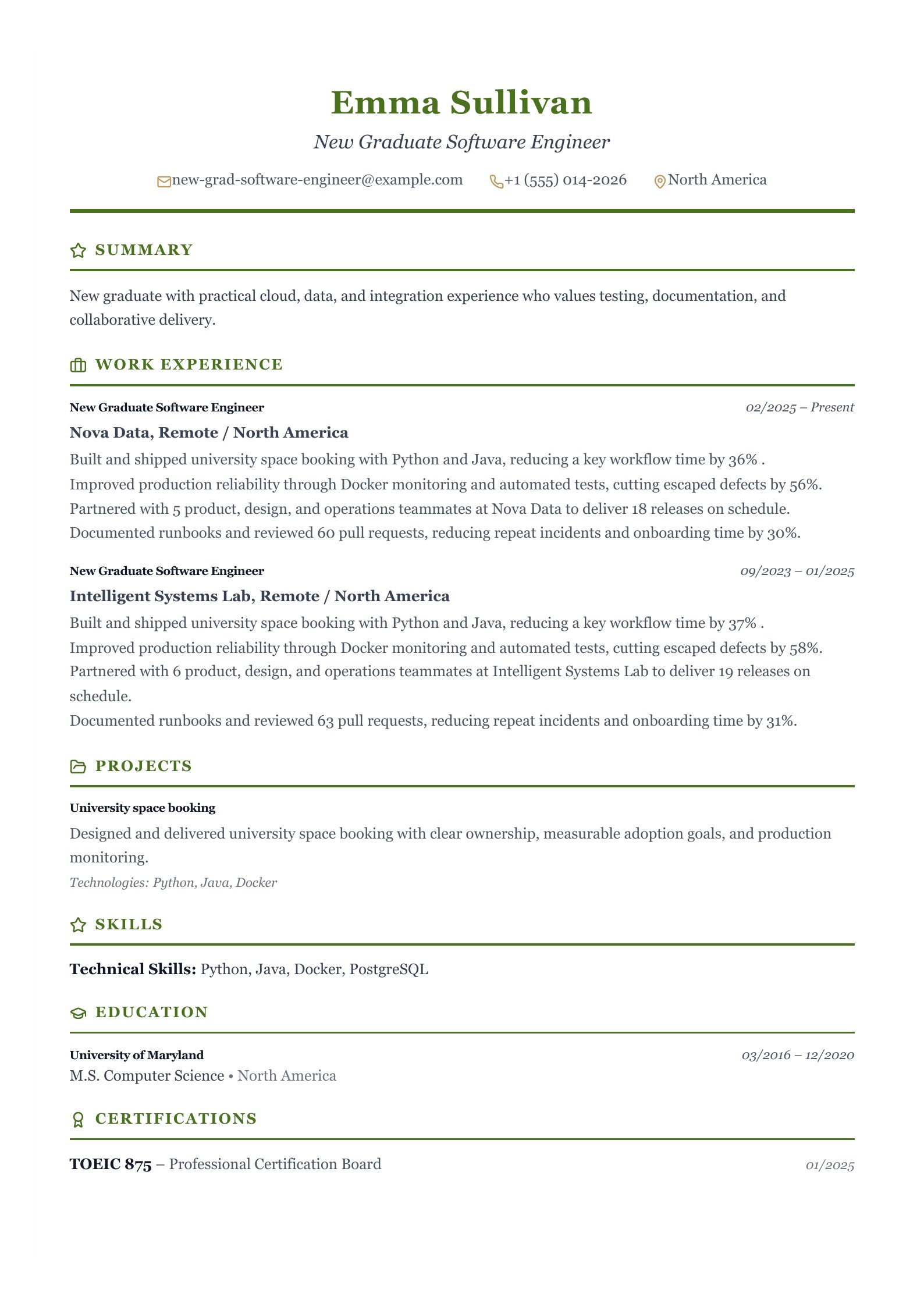
Integrates research, internships, and software fundamentals.
Best for: Early-career application development
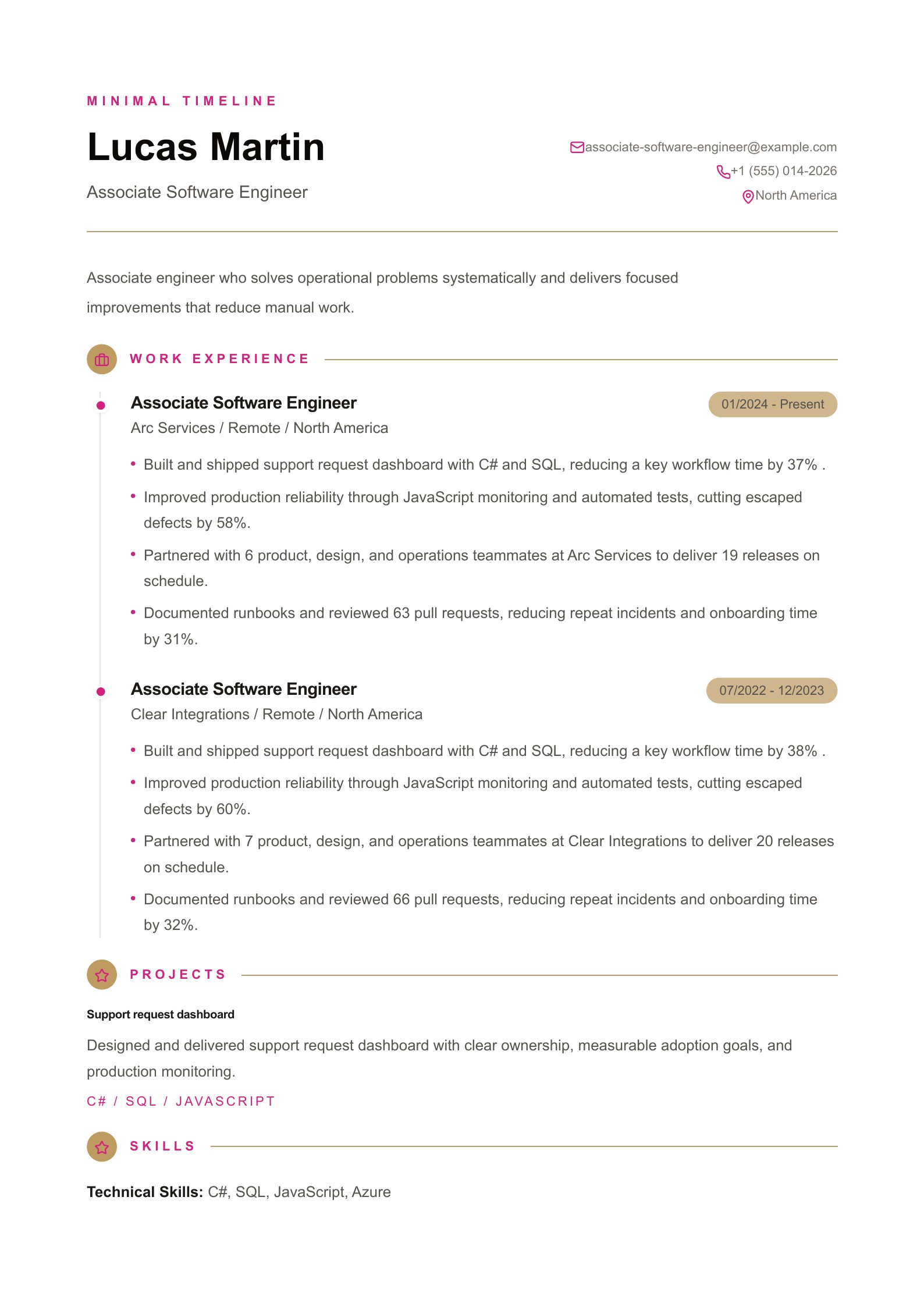
Demonstrates maintenance, incident response, and team support.
Best for: QA, testing, and software quality
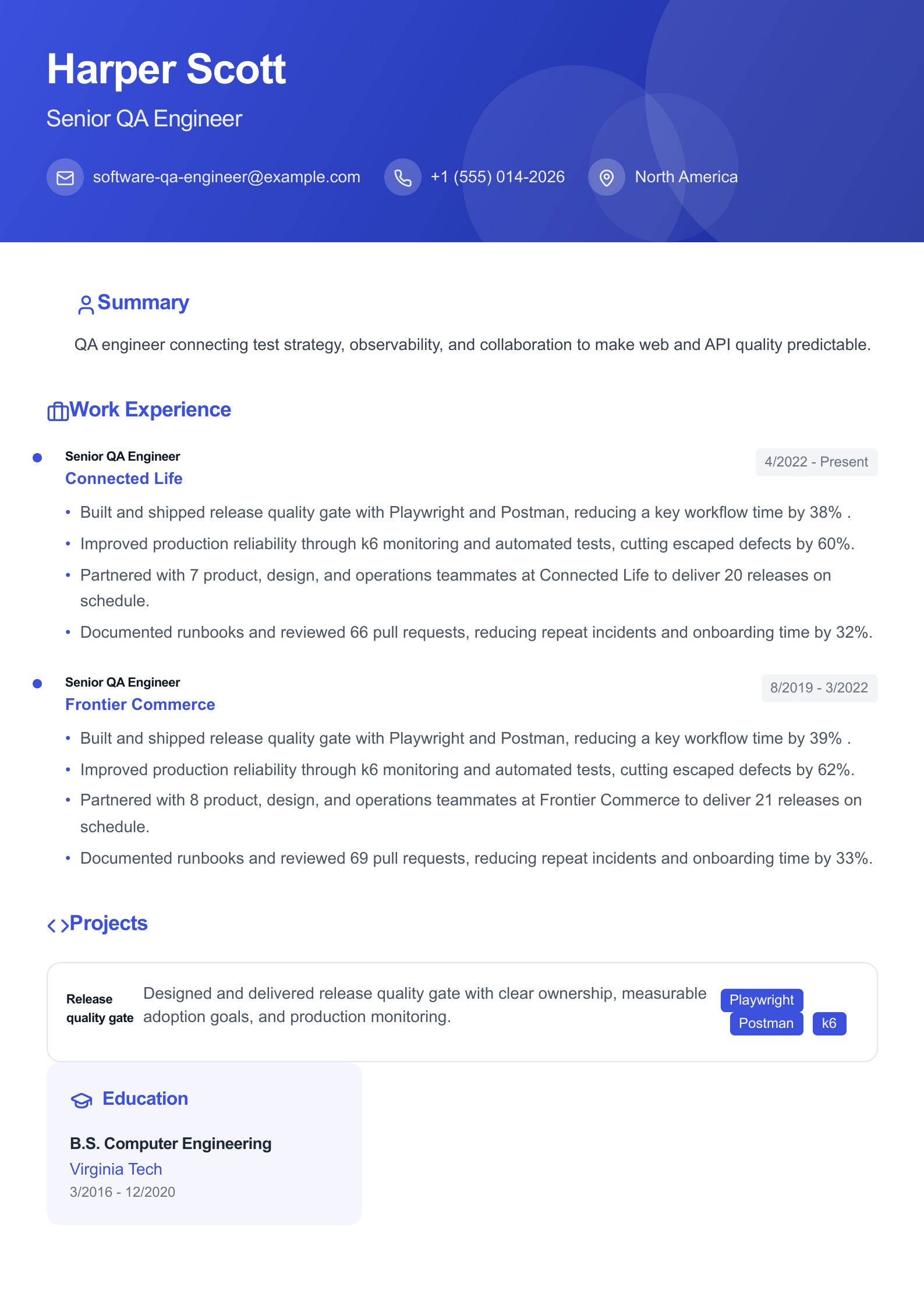
Highlights automation, quality metrics, and release validation.
Best for: Students and early portfolios
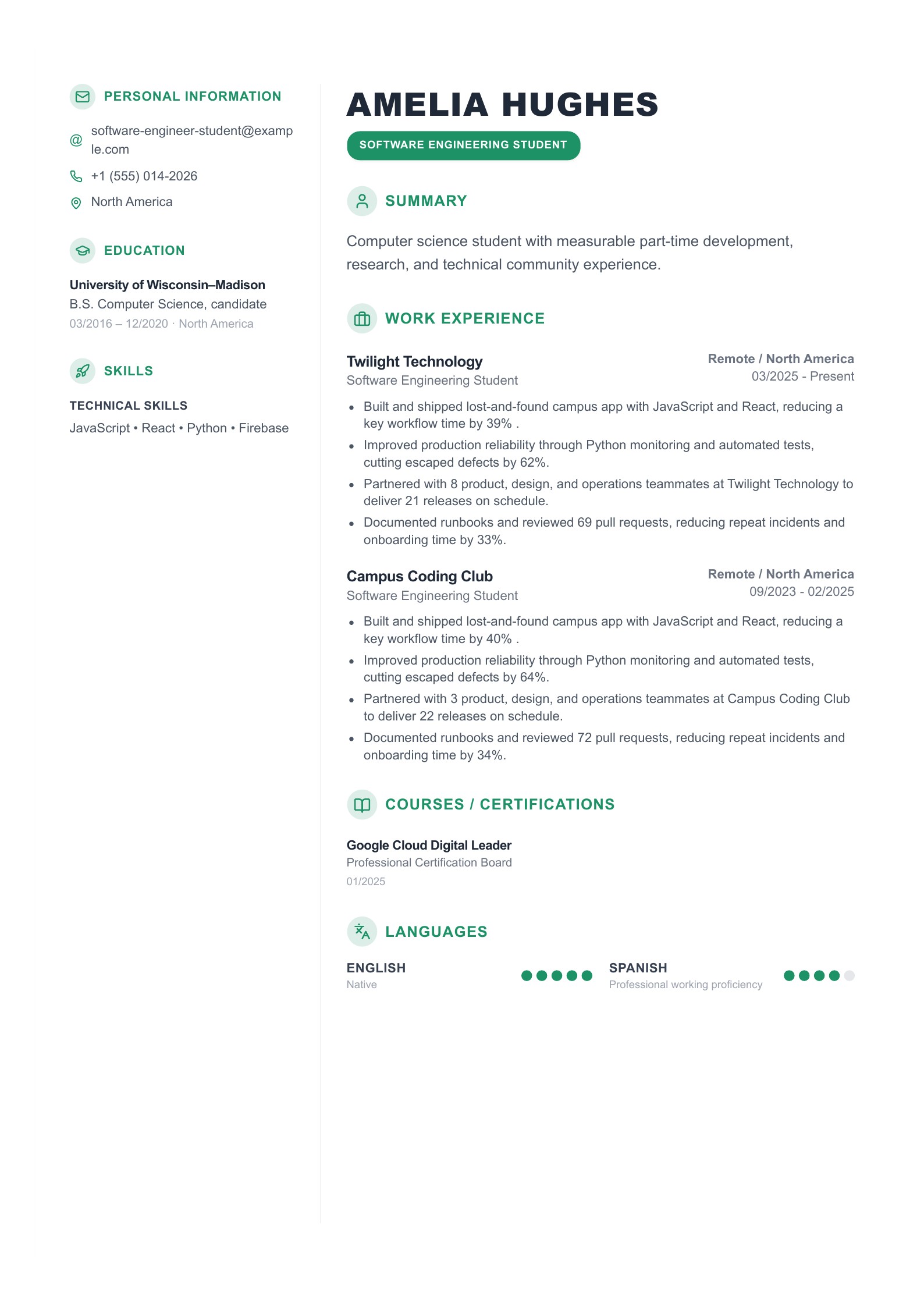
Presents university projects and measurable early technical work.
Best for: Bootcamps and career transitions
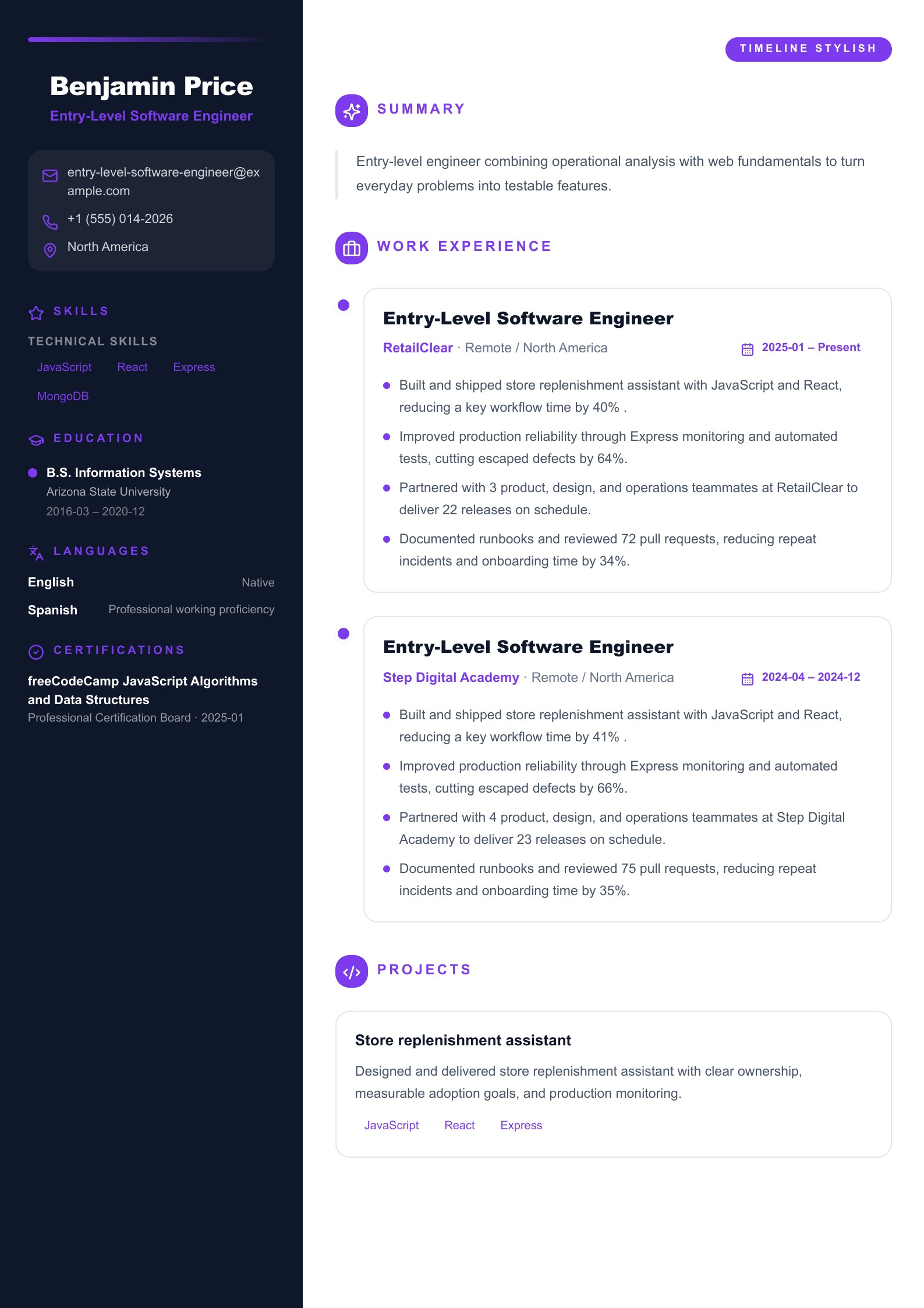
Makes training, career transition, and portfolio results visible.
Best for: First software engineering roles
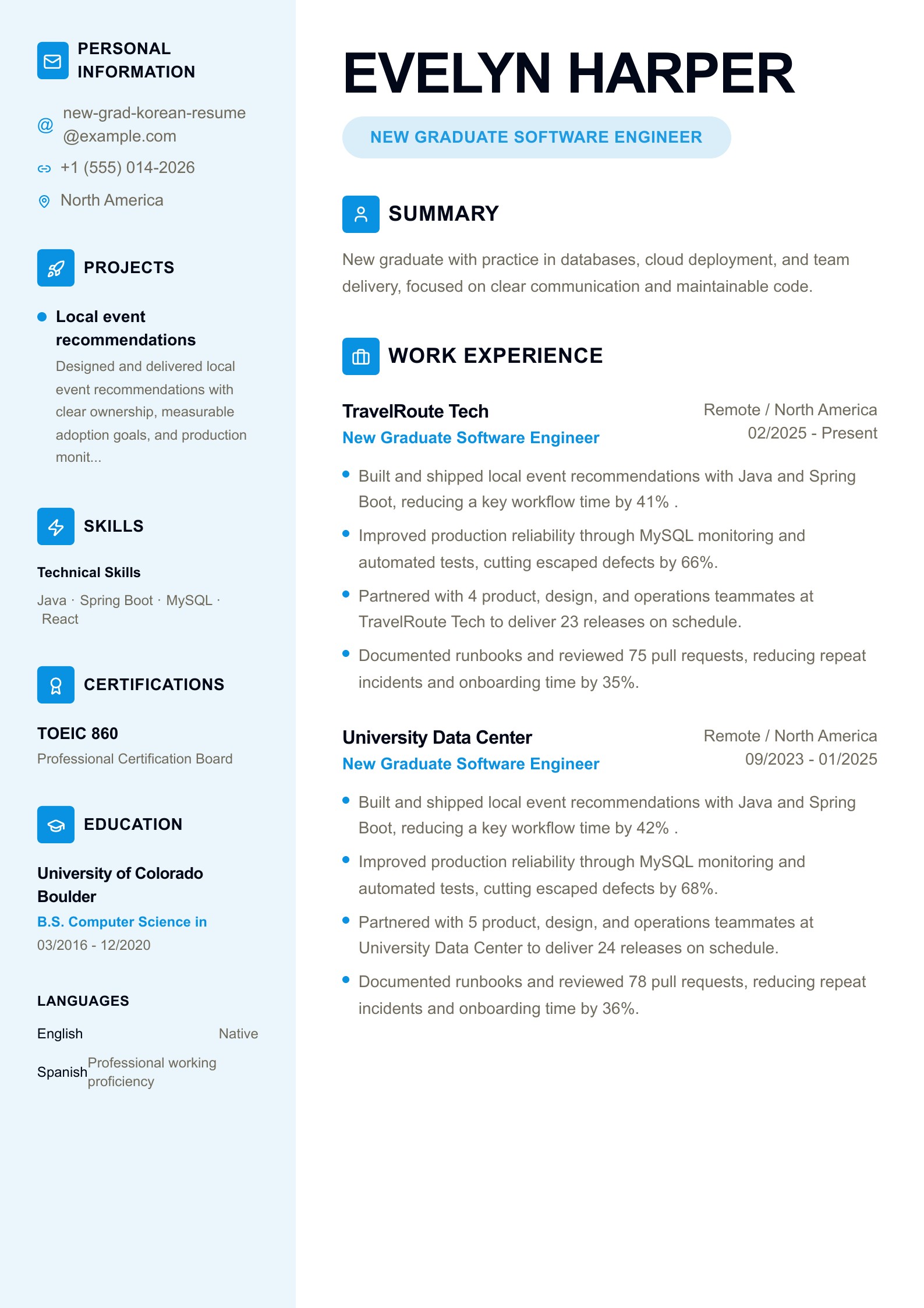
Presents practical foundations for a first engineering role.
A strong engineering resume does not need big claims. It needs enough context for a recruiter to understand what changed, what you owned, and how you know it worked.
Lead with the change your work produced. A faster checkout, fewer failed jobs, a shorter release cycle, or higher weekly retention gives the reader a reason to keep reading. Follow the result with the technical decision that made it possible.
Name the part you owned: the API design, migration plan, test strategy, rollout, or on-call follow-up. You can mention the team, but do not hide your contribution inside a sentence about what ‘we’ delivered.
A number means more when the reader knows what it measures. Include request volume, dataset size, team size, launch window, legacy constraints, or reliability targets when they explain the difficulty of the work.
Most bullets work well with a simple shape: action, technical context, result. Keep the stack to the tools that mattered for that outcome, and use numbers you could explain in an interview.
A useful rewrite
Before: Responsible for improving the payments API and supporting the release process.
After: Reworked the payments API in Node.js, lowering p95 latency from 3.2s to 1.5s and cutting release checks from 45 minutes to 18.
Practical answers for writing, adapting, and sending a technical resume.
Give the most space to recent, relevant work. For a mid-career engineer, two or three recent roles with three to five bullets each is usually enough. Add one or two projects only when they prove a skill that your work history does not show.
Use measures you can discuss without naming confidential figures: percentage change, response-time bands, error-rate movement, hours saved, number of users, or the size of the team and system. If you only have an estimate, label it as an estimate and explain how you calculated it.
Keep a short skills section for searchability, then mention a tool in the bullet where it mattered. ‘Built a Kafka consumer’ tells more than a long list of Kafka, Java, Redis, and Kubernetes with no connection to an outcome.
Use internships, research, class projects, freelance work, and volunteer builds when they include a real problem and a finished result. State your role, the users or constraints, and what changed after you shipped it.
Keep one accurate master version, then adjust the summary, skills order, and two or three bullets for the role. Match the employer’s terminology only when it describes work you have actually done.
Yes. Download the PDF when you need a ready-to-send file, then use the Edit this resume button on the matching card to continue changing the content and layout online.