Senior Data Analyst Resume Example
Best for: Senior analysts owning cross-functional analytical programs
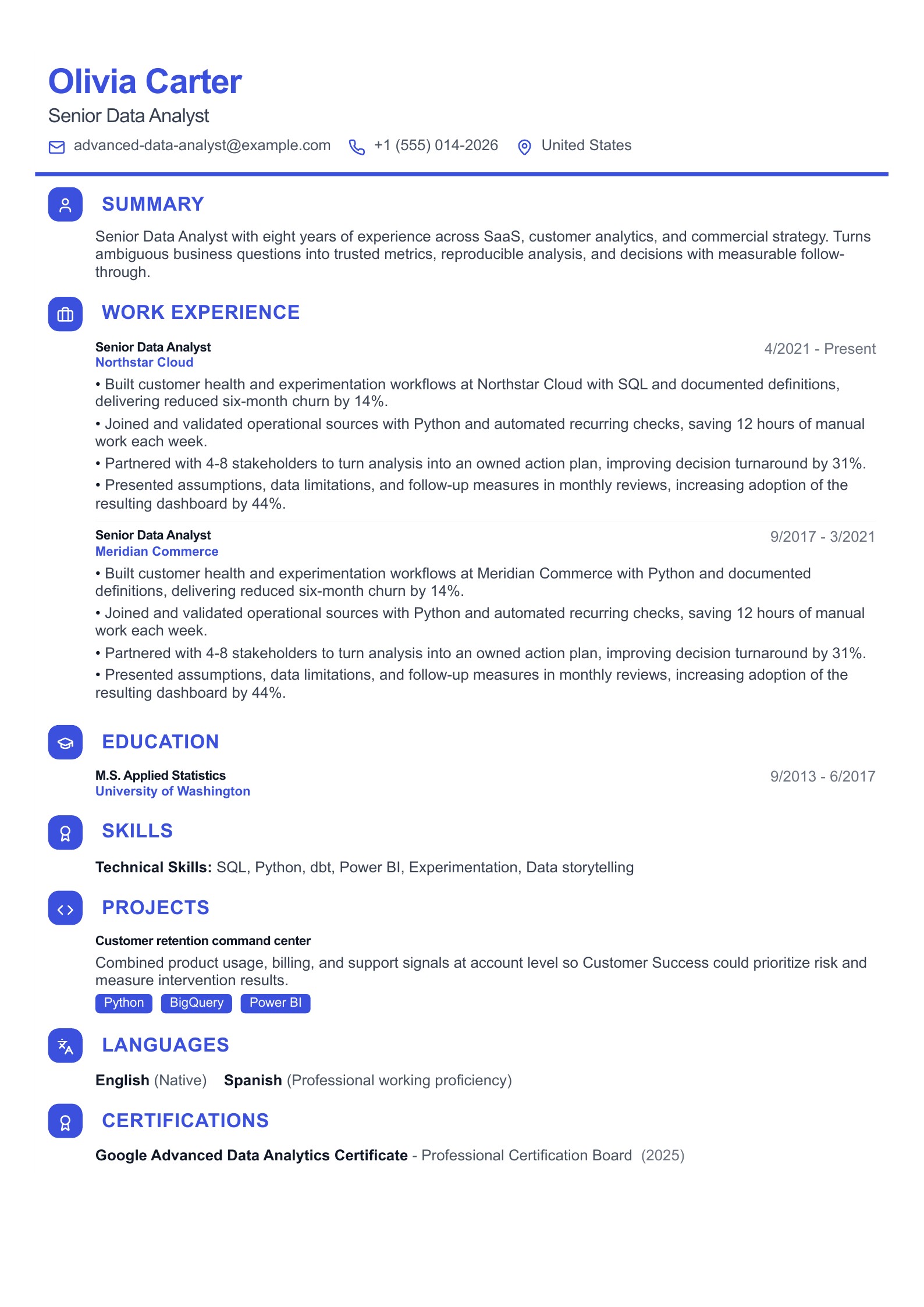
Connects customer retention, experimentation, data products, and commercial decisions to measurable outcomes.
Explore 15 data analyst resume examples covering SQL, Python, dashboards, governance, and measurable results.
Names, companies, contact details, and metrics are fictional examples for educational use.
Use the structure that matches your experience and replace fictional information with evidence from your own work.
Best for: Senior analysts owning cross-functional analytical programs
Connects customer retention, experimentation, data products, and commercial decisions to measurable outcomes.
Best for: Analytics managers and heads of data functions
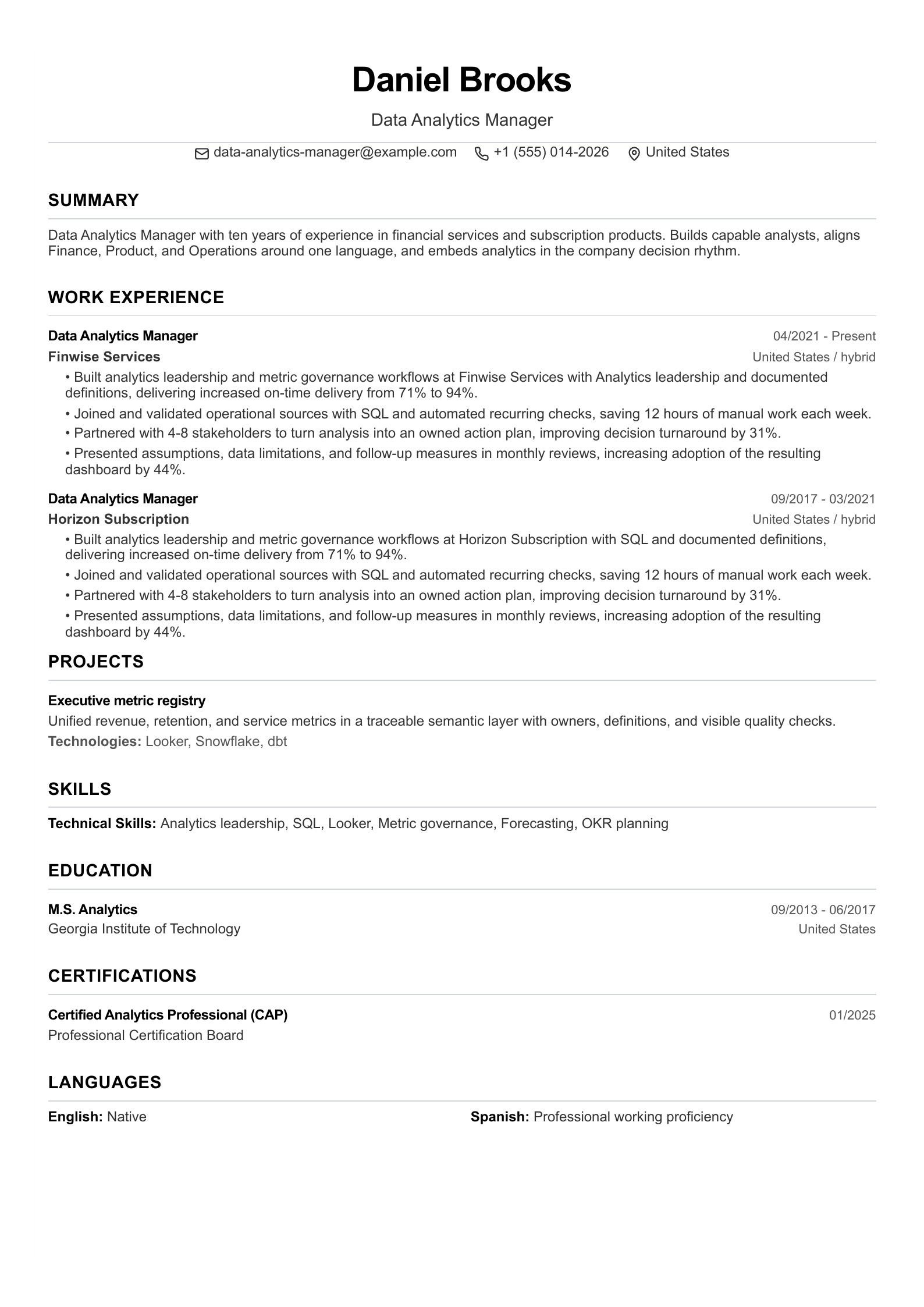
Highlights analytics leadership, metric governance, forecasting, and executive decision support.
Best for: Data analysts with around three years of experience
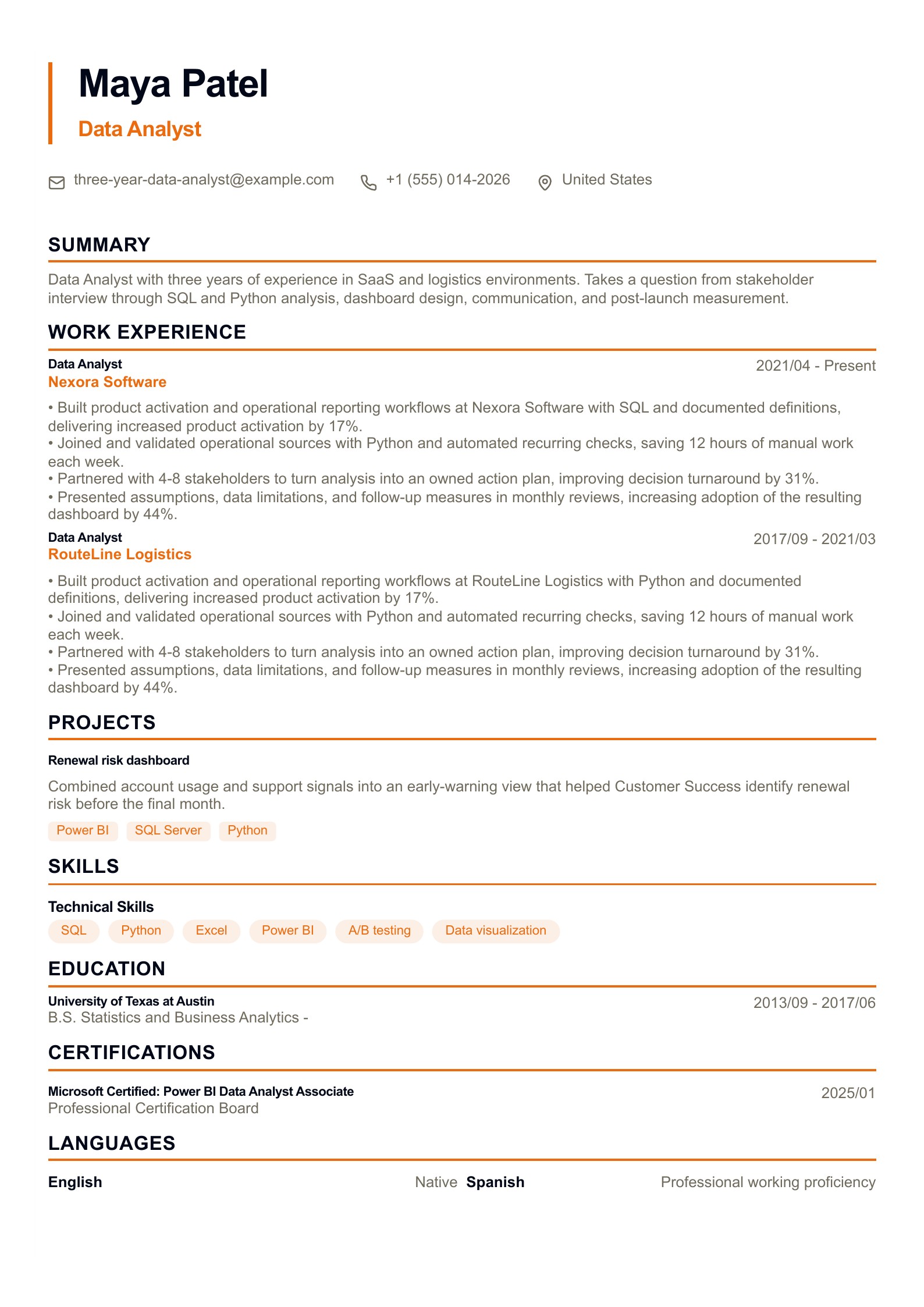
Shows end-to-end ownership from business question and data preparation to dashboard delivery and impact review.
Best for: Junior analysts with first reporting or data-quality experience
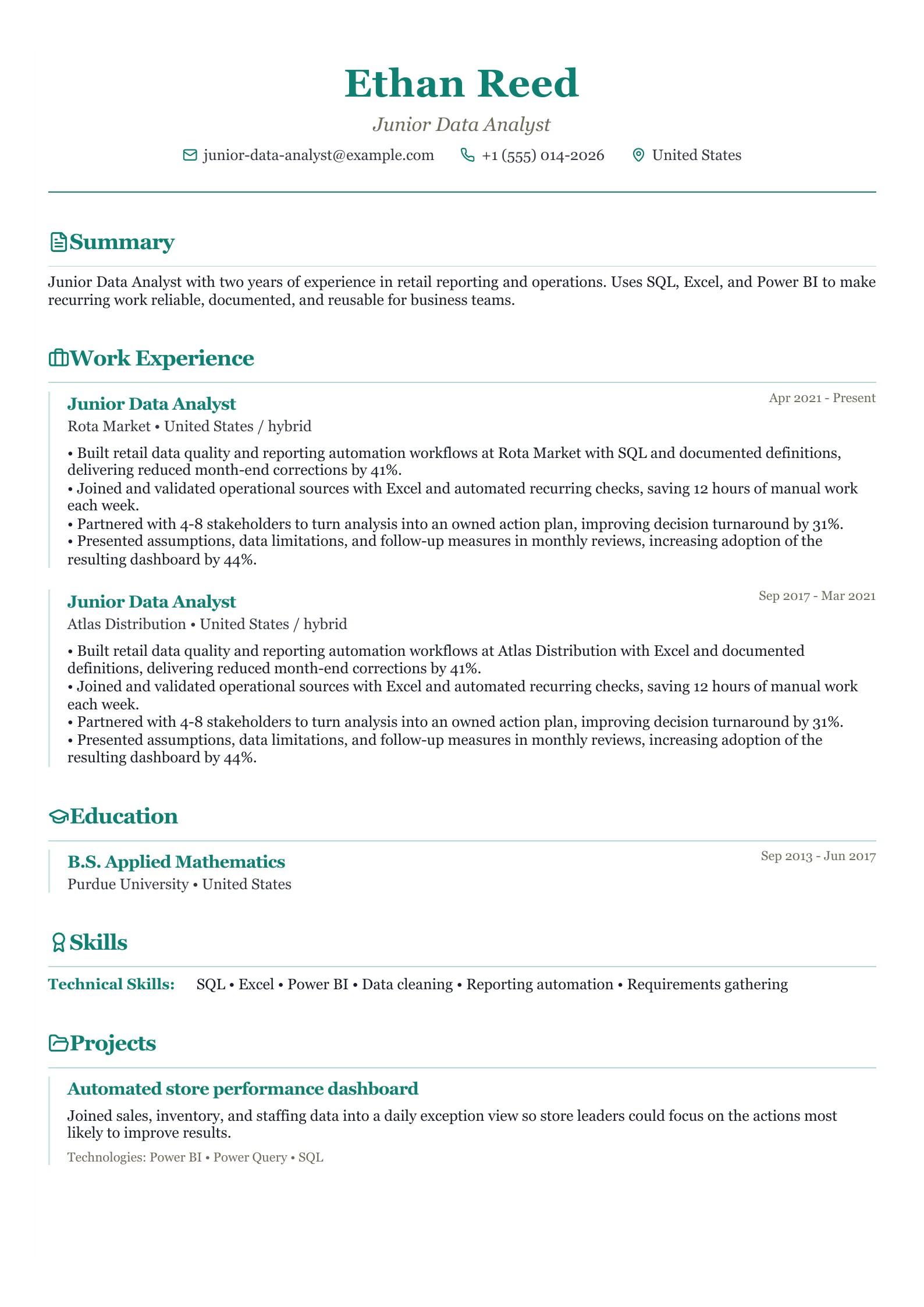
Emphasizes careful data cleaning, report maintenance, quality checks, and practical business collaboration.
Best for: Career changers, bootcamp graduates, and first data roles
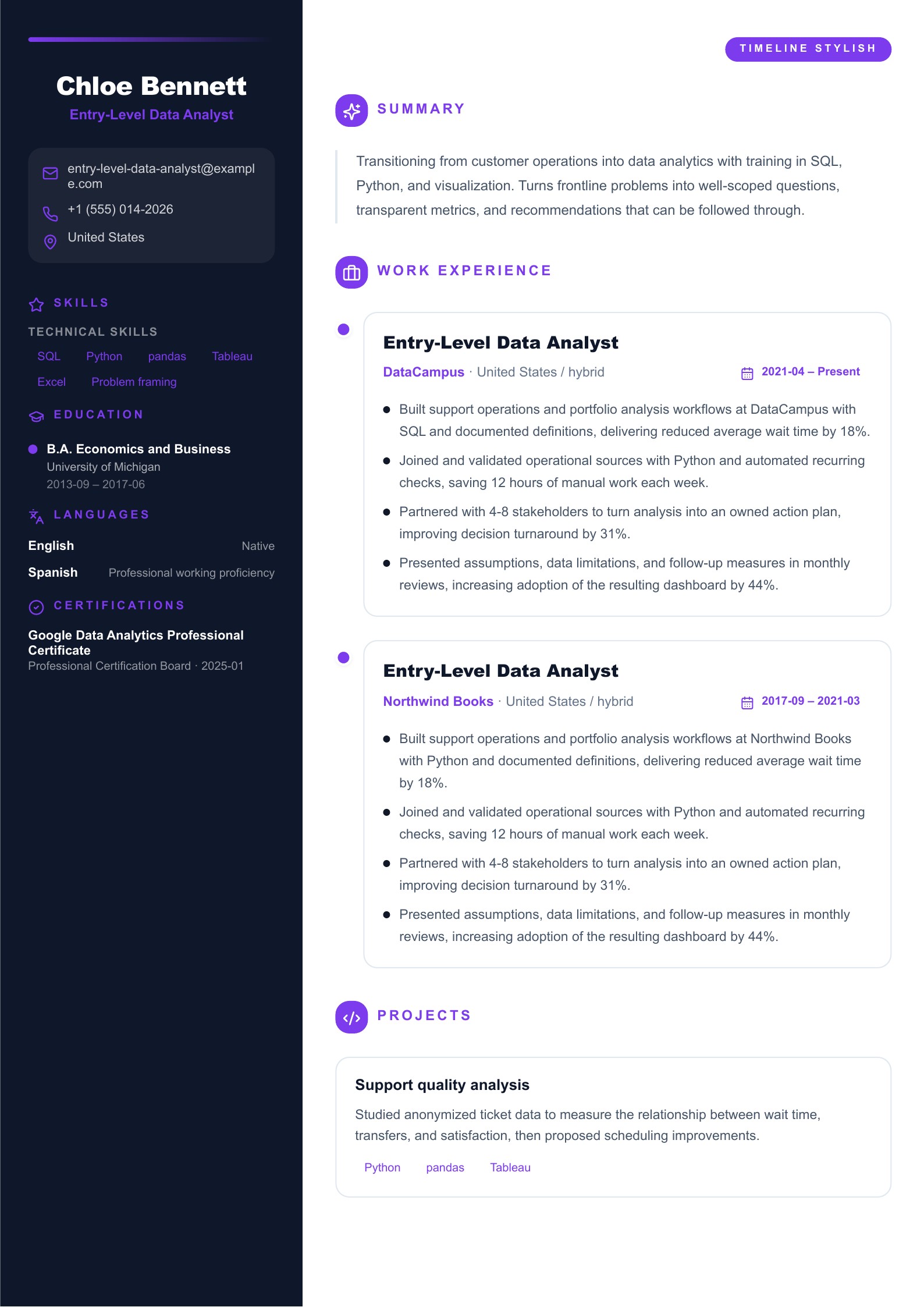
Combines operations experience, analytics training, and portfolio projects for a first data analyst application.
Best for: Students and candidates applying for analytics internships
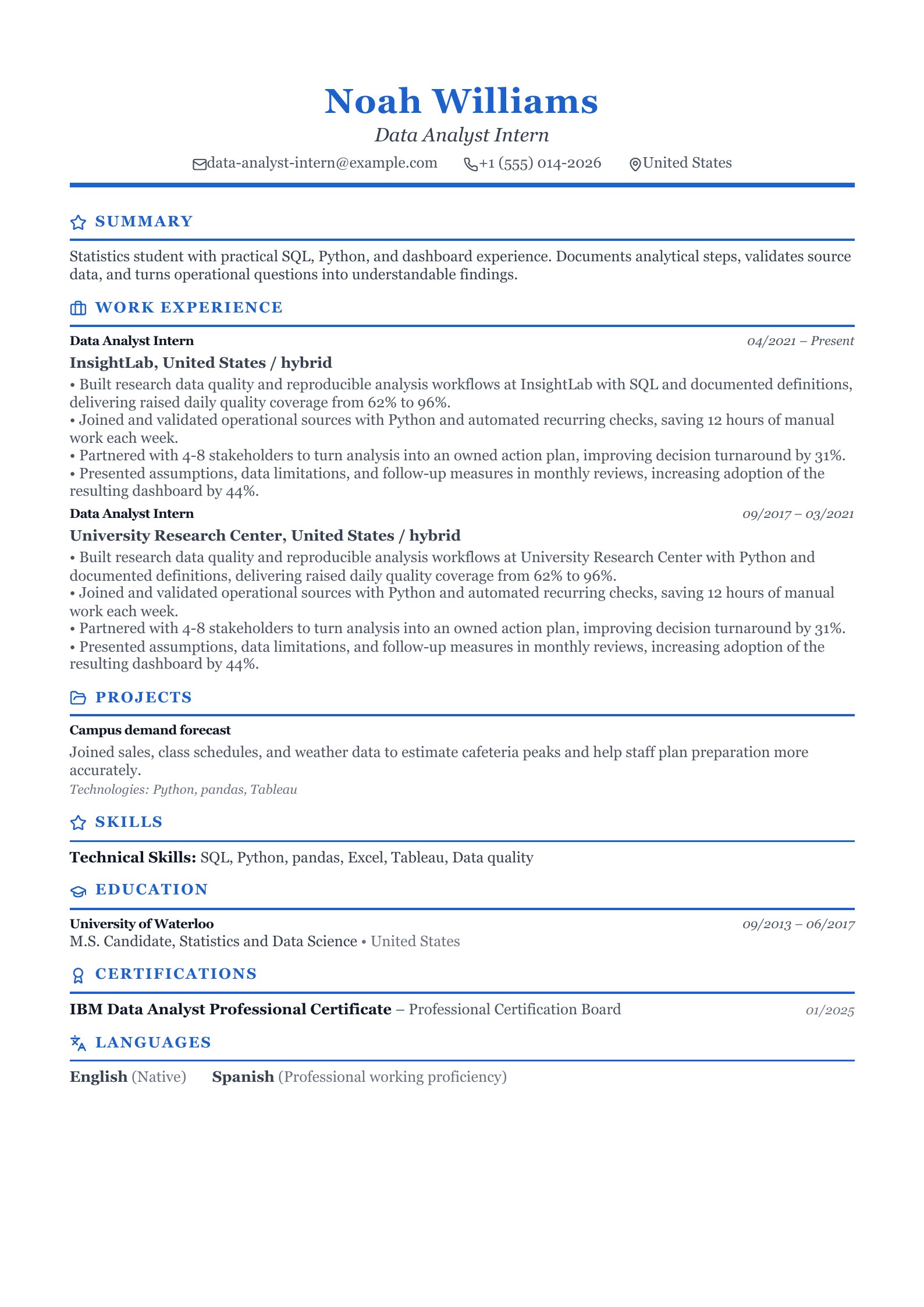
Presents coursework, internship work, data quality, and a reproducible project for an early analytics opportunity.
Best for: Senior analysts leading programs without direct reports
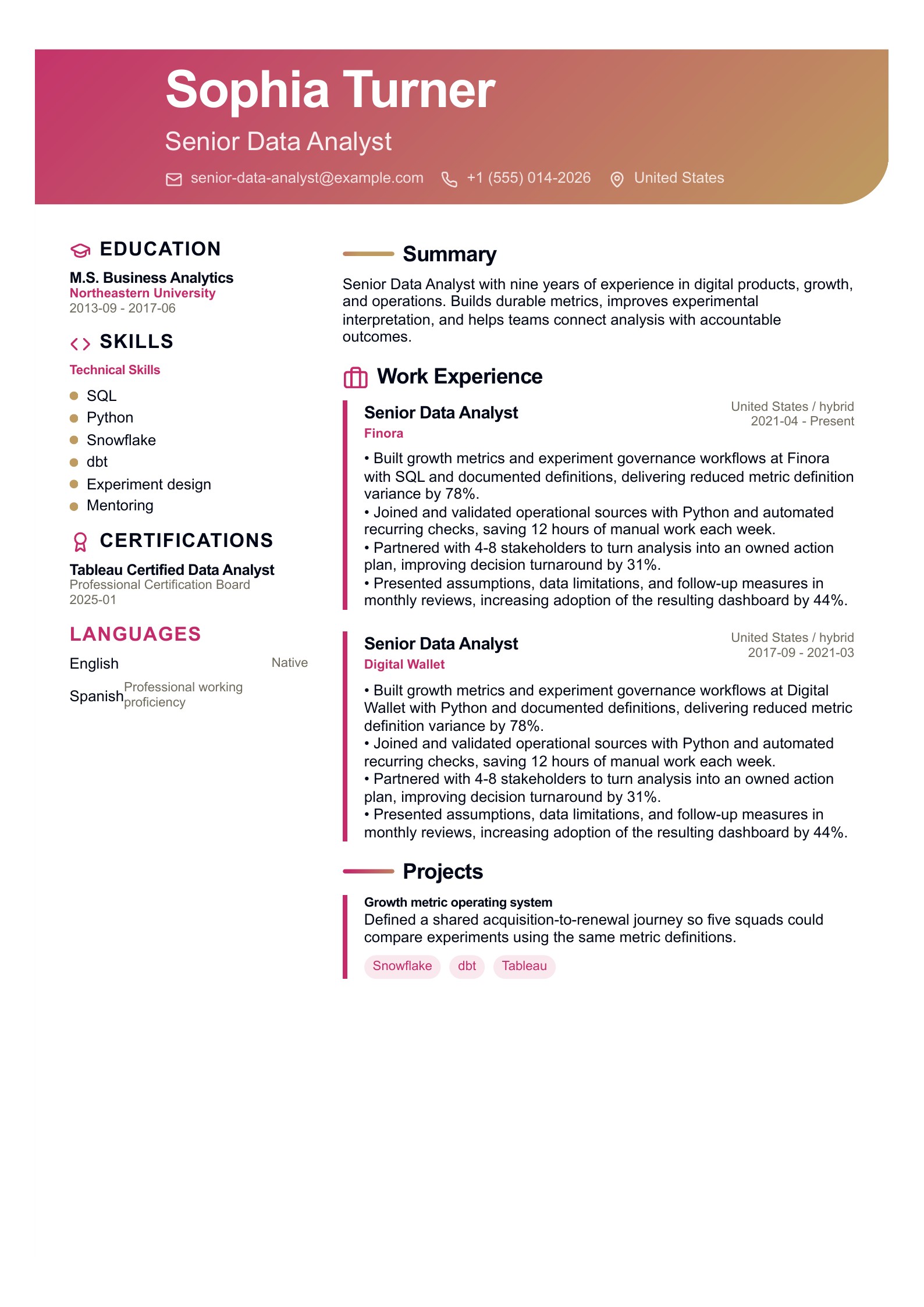
Focuses on analytical strategy, metric ownership, experiment quality, and influence across product and growth teams.
Best for: Leads and owners of cross-functional analytics programs
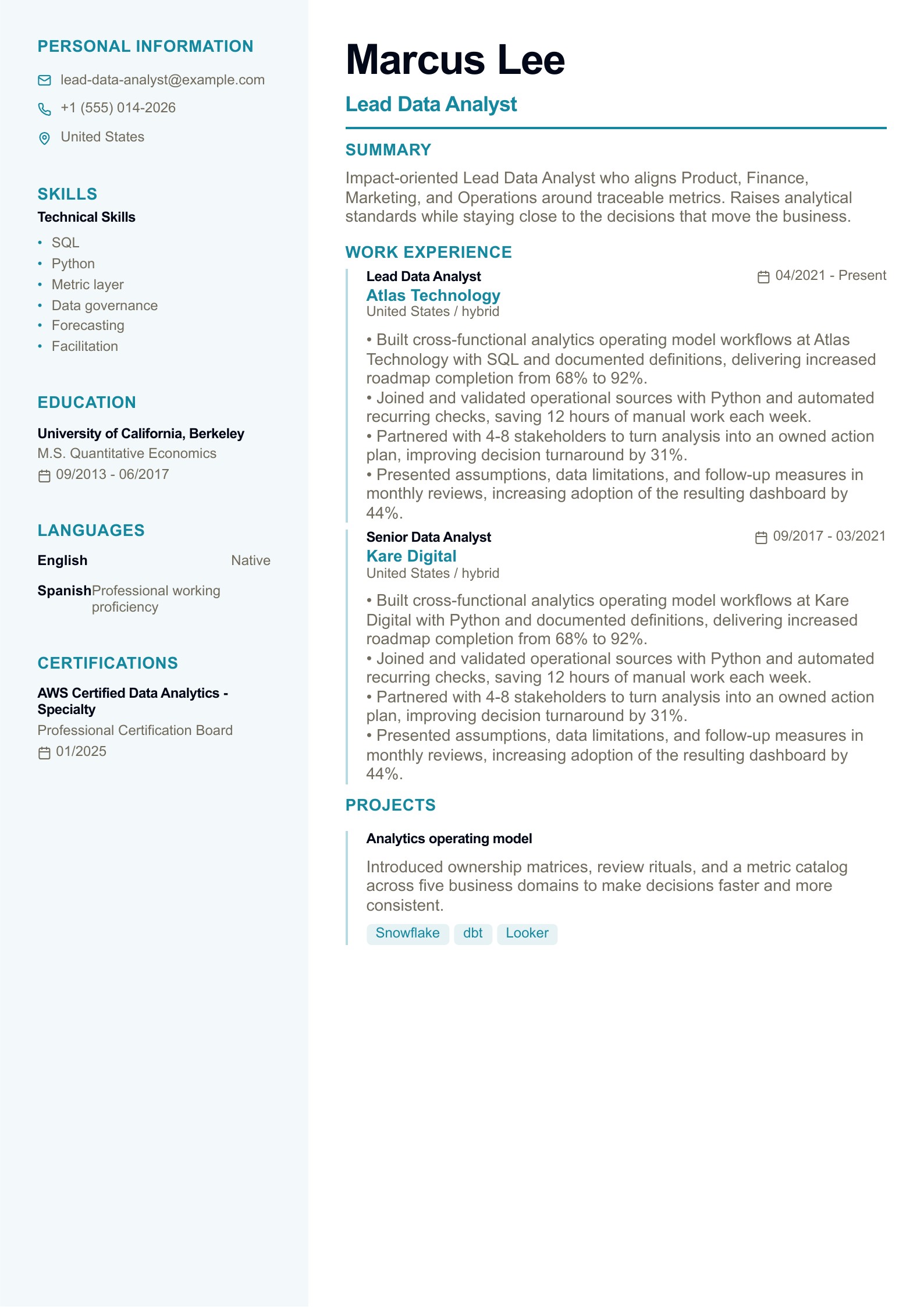
Illustrates analytical leadership, decision frameworks, metric governance, and influence across multiple business domains.
Best for: Marketing analysts working across paid, lifecycle, and growth channels
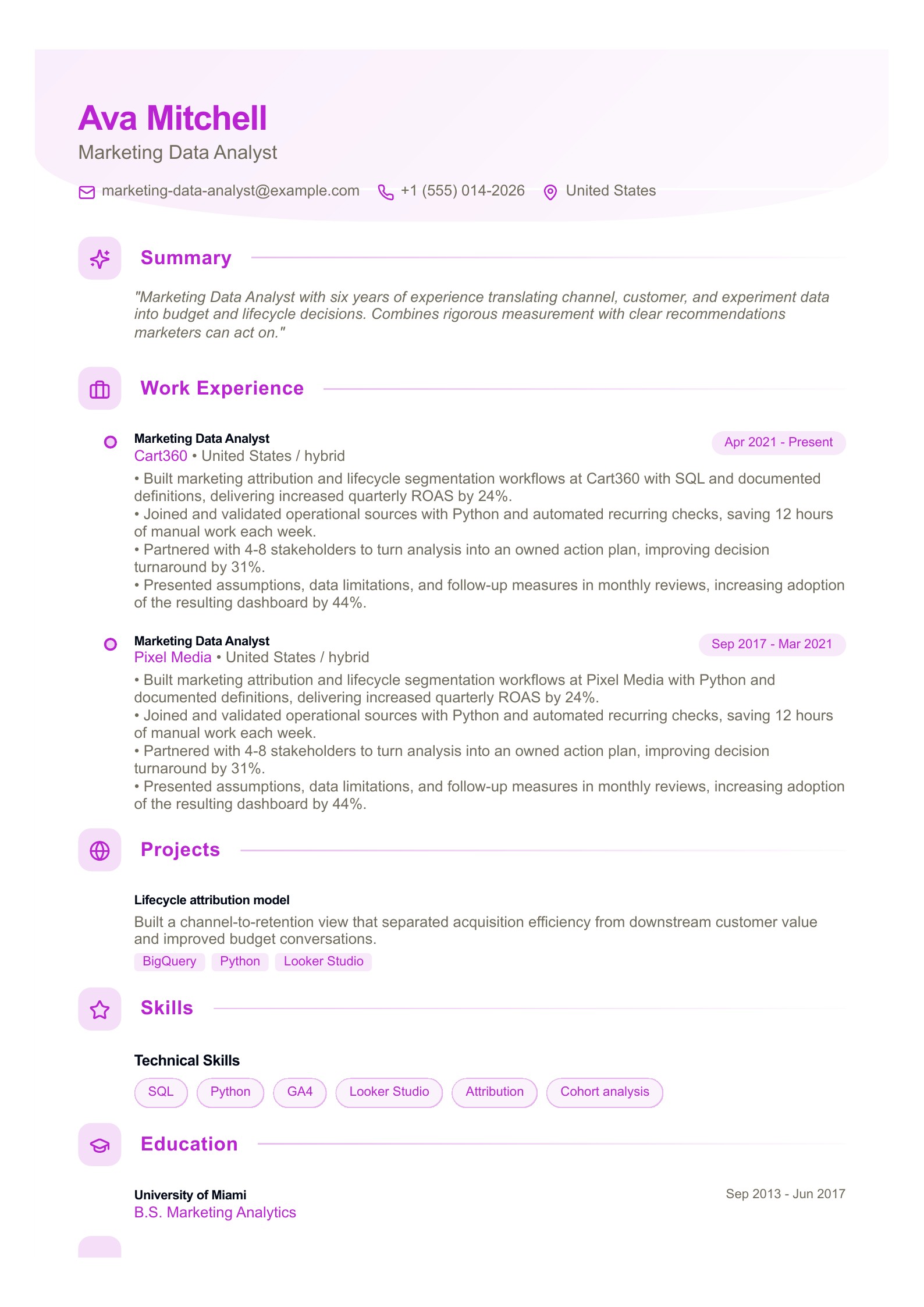
Highlights attribution, segmentation, ROAS, funnel reporting, and experimentation for performance marketing teams.
Best for: Clinical analytics, research operations, and trial data roles
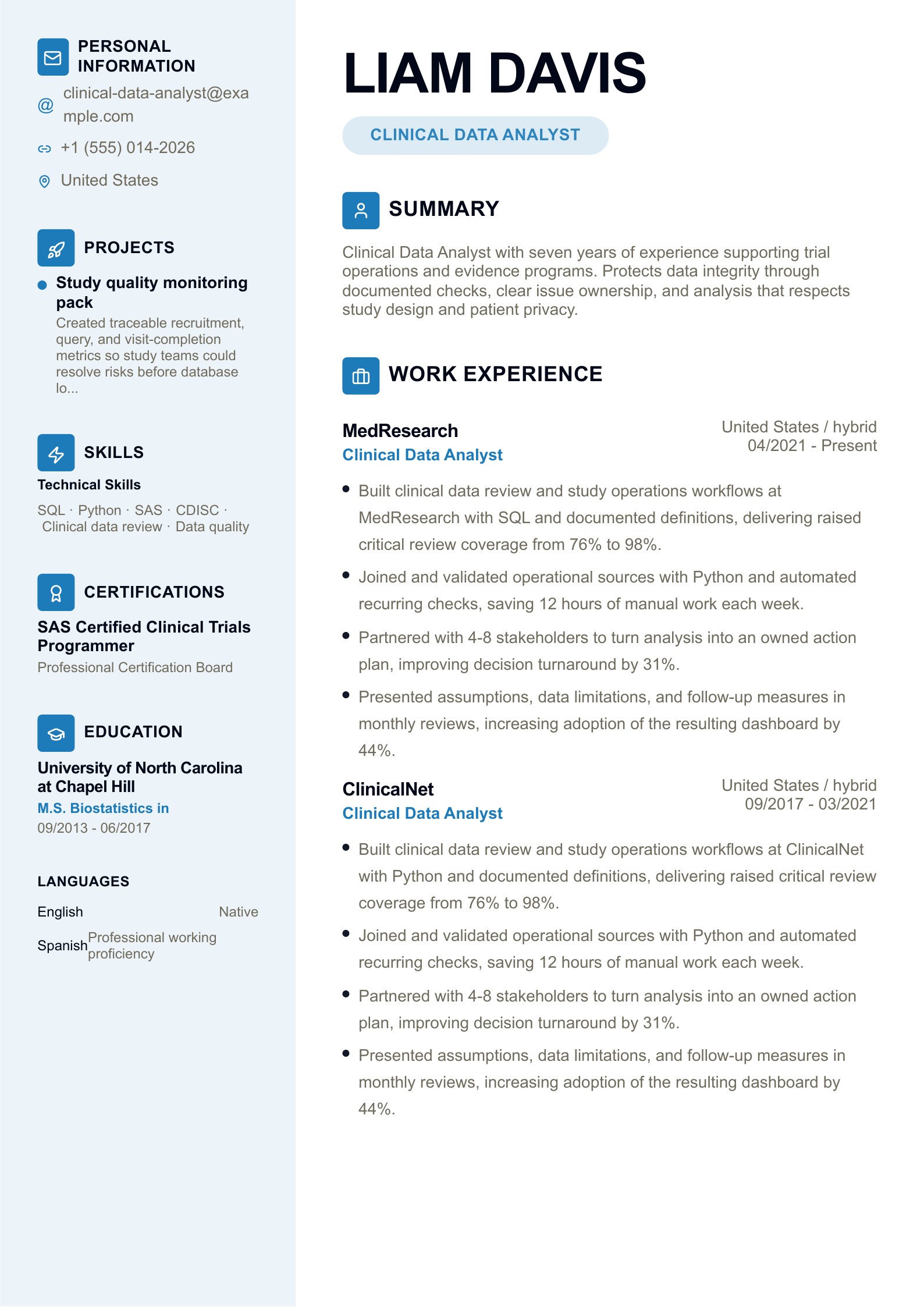
Shows clinical data quality, study operations, CDISC familiarity, and research metrics with careful documentation.
Best for: Healthcare operations, quality improvement, and patient analytics
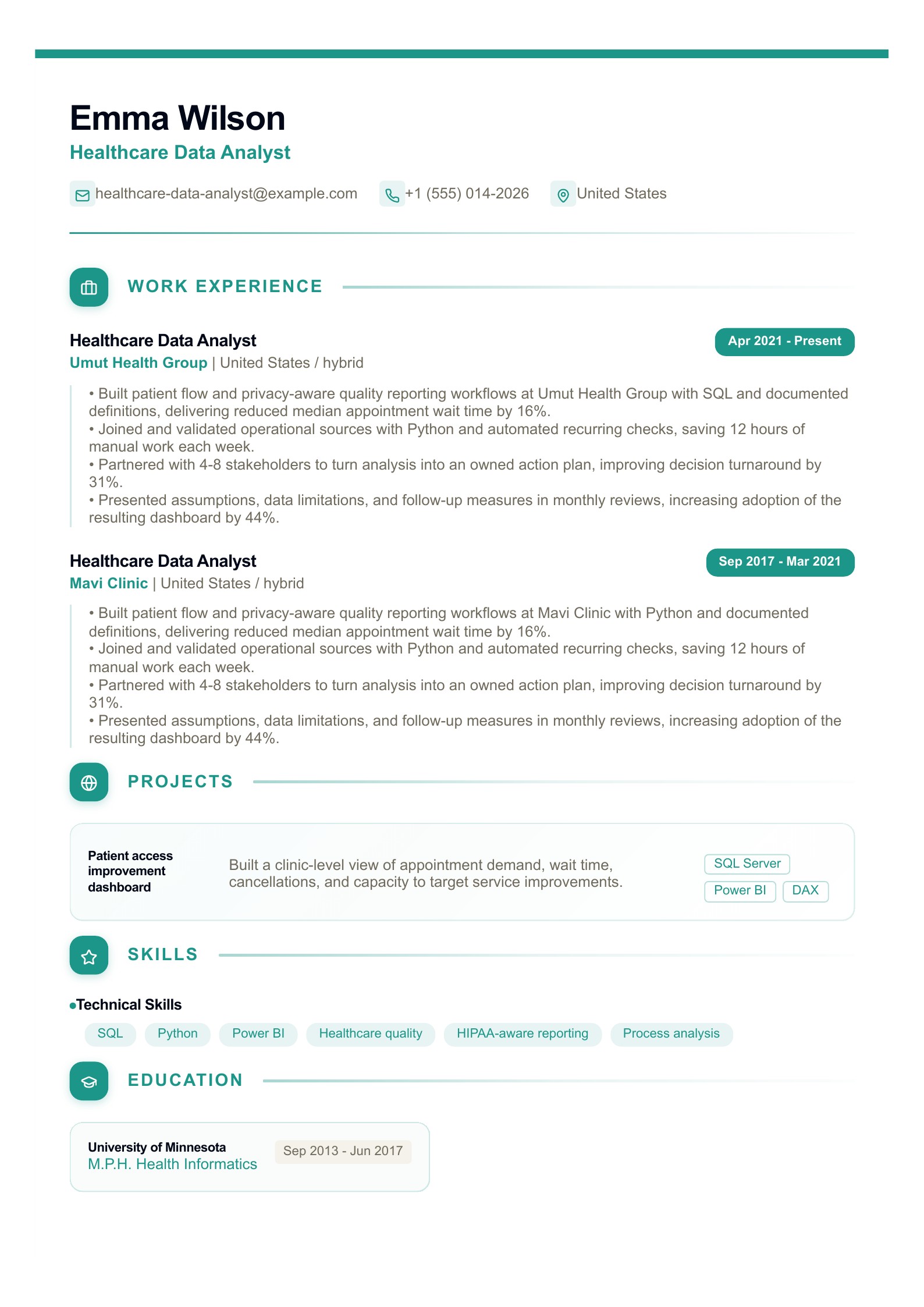
Combines patient-flow analytics, quality measures, operational reporting, and privacy-aware partnership.
Best for: Business analysts supporting operations, finance, and planning
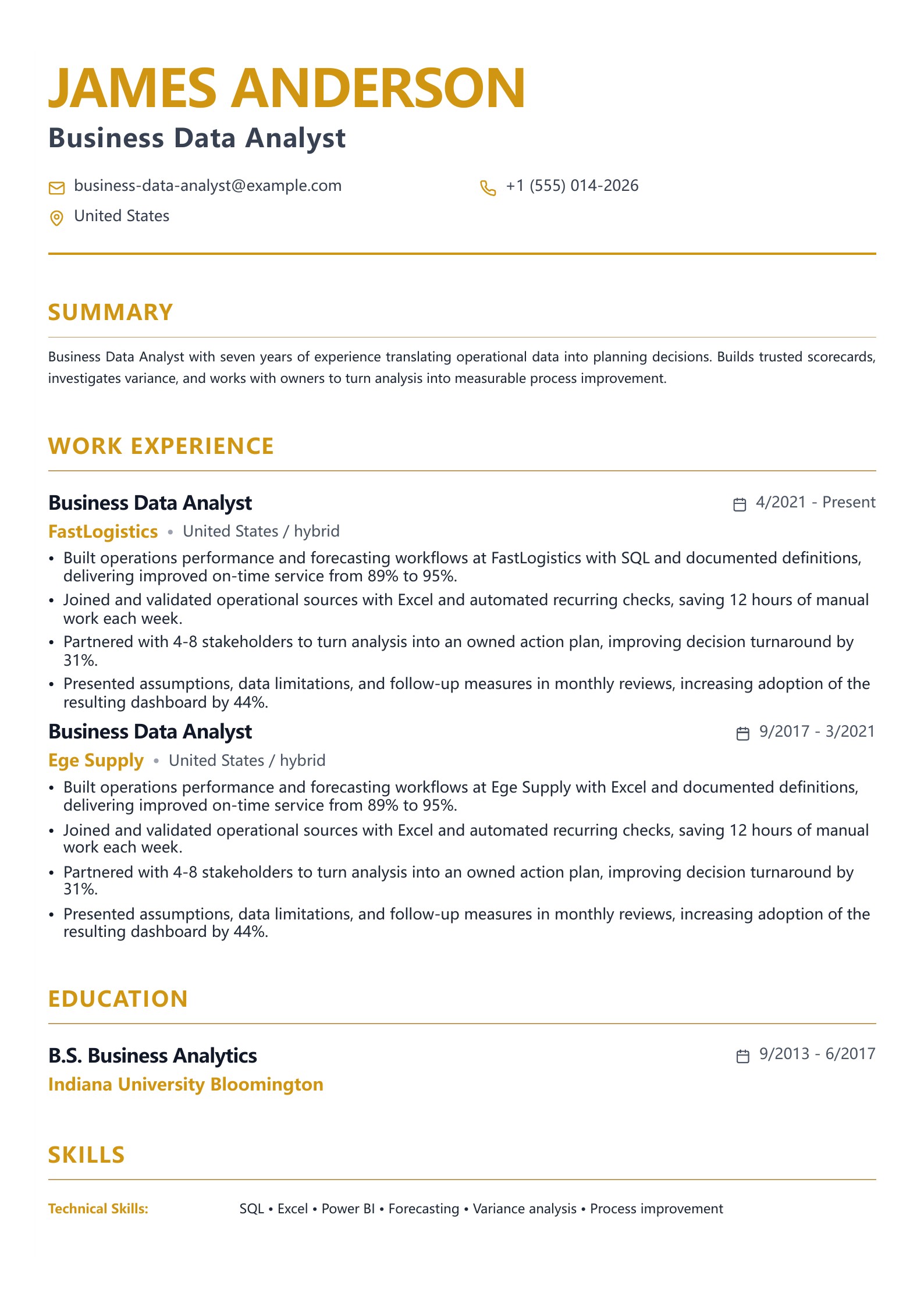
Presents operational performance, forecasting, process improvement, and commercial decision support.
Best for: Data governance, stewardship, catalog, and quality roles
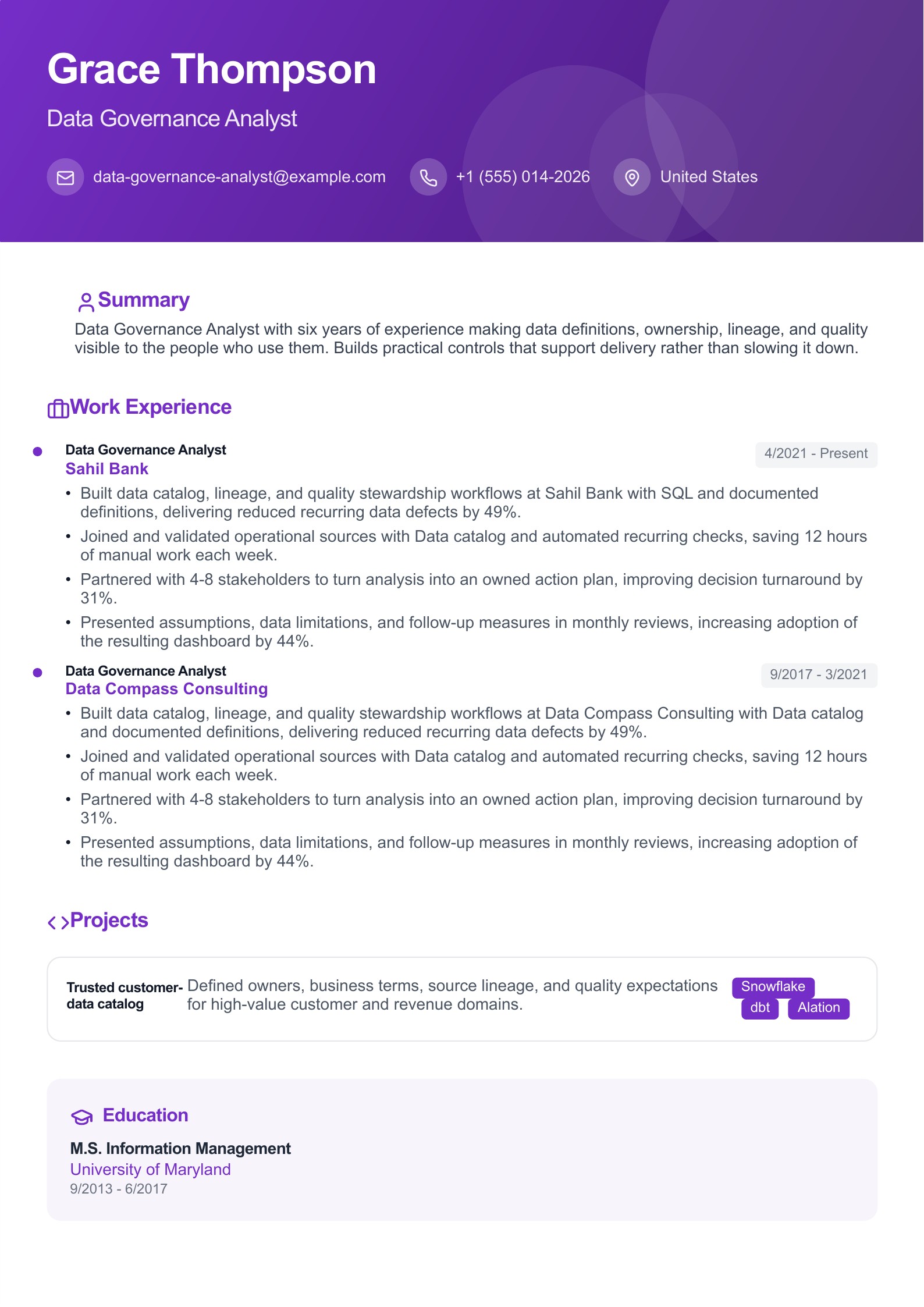
Highlights data cataloging, quality rules, lineage, ownership, and governance processes that make analytics trustworthy.
Best for: Power BI analysts building governed self-service reporting
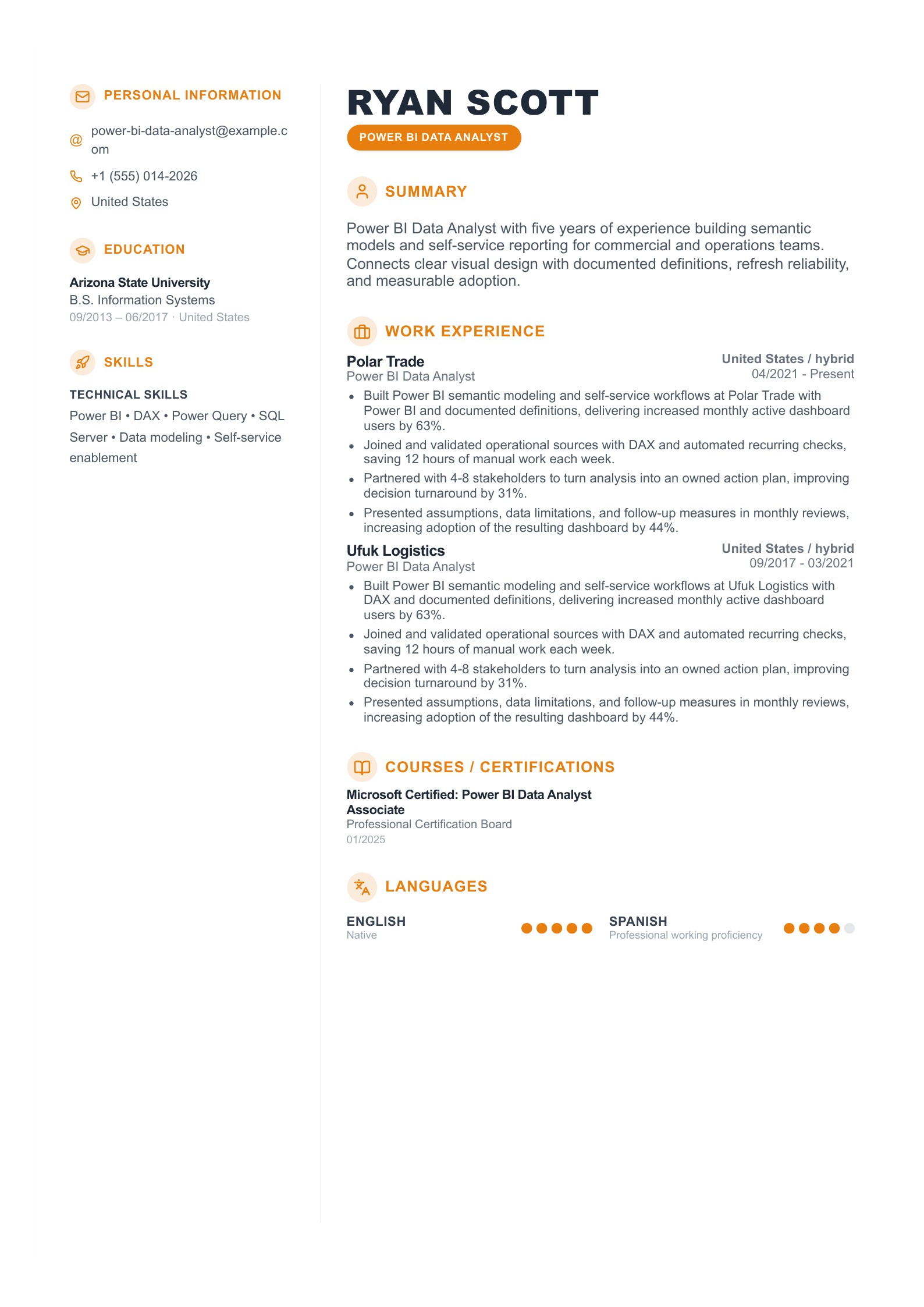
Makes DAX, Power Query, semantic modeling, dashboard adoption, and business impact easy to scan.
Best for: SQL-first analysts and analytics engineering partners
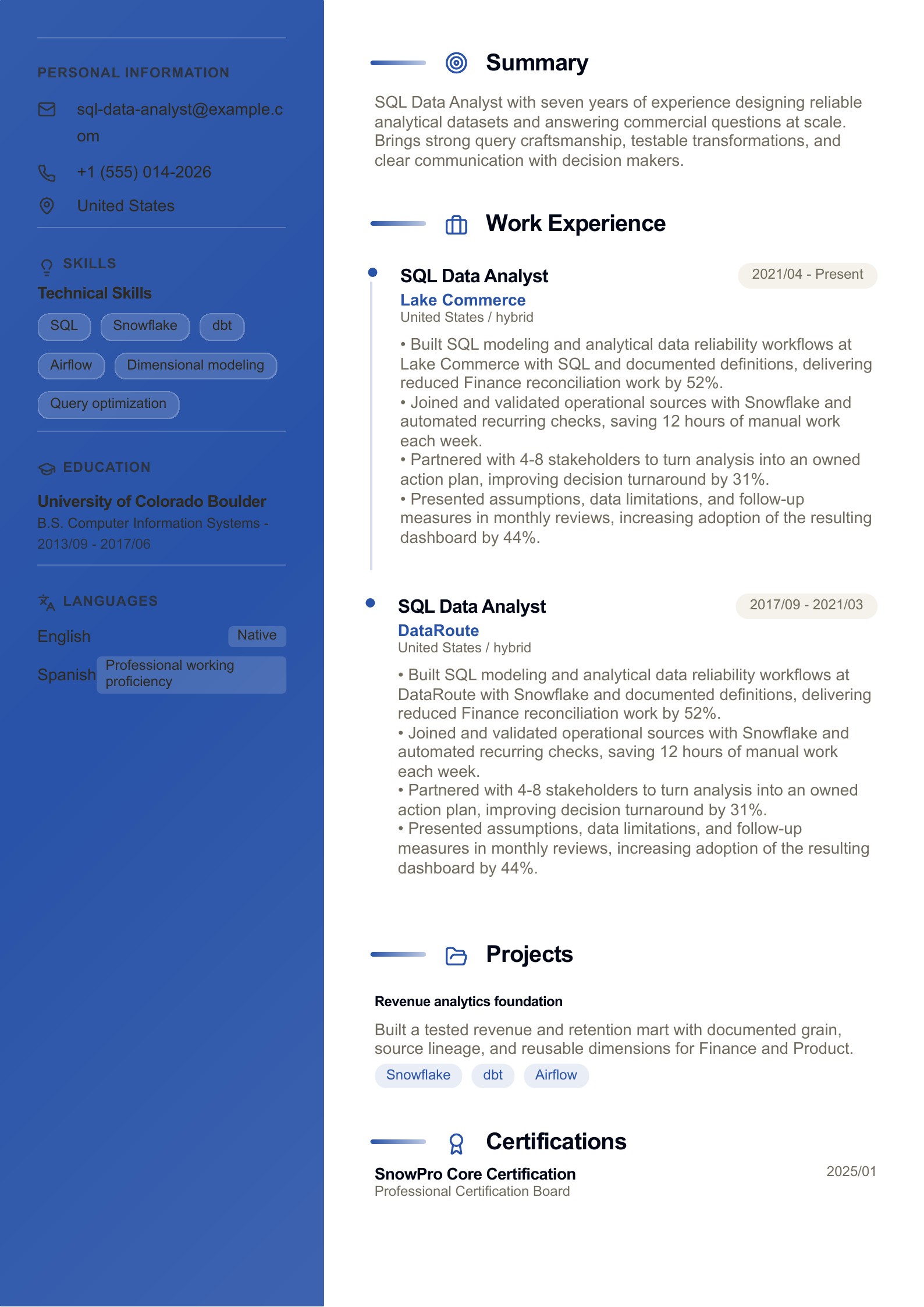
Centers on dimensional modeling, query optimization, dbt, Snowflake, and reliable analytical datasets.
A strong data analyst resume is more than a list of tools. It explains the question, the data, the validation method, and the decision or improvement that followed.
Start with impact: faster reporting, fewer errors, better activation, hours saved, or a more accurate forecast. Add the method and tools that made the result possible.
Name what you owned: source definitions, cleaning, SQL models, dashboard design, experiment analysis, or stakeholder readout. This gives technical work a credible scope.
Mention sources, checks, volumes, assumptions, and decision makers when they add credibility. A useful bullet combines action, technical context, and business effect.
Connect every technical action to a business question, the data used, your ownership, and a result that can be verified. A dashboard alone does not demonstrate analytical value.
Yes. All 15 English examples are available as PDF downloads. Replace fictional details with your own evidence and numbers you can explain in an interview.
Use portfolio projects, coursework, internships, research, or operations experience. Explain the problem, sources, cleaning, method, checks, and recommendation.
Keep a concise skills section for searchability, then show the tools inside achievement bullets. This makes the outcome of the technology visible.