Full Stack Developer Resume
Best for: Product-focused full stack developers
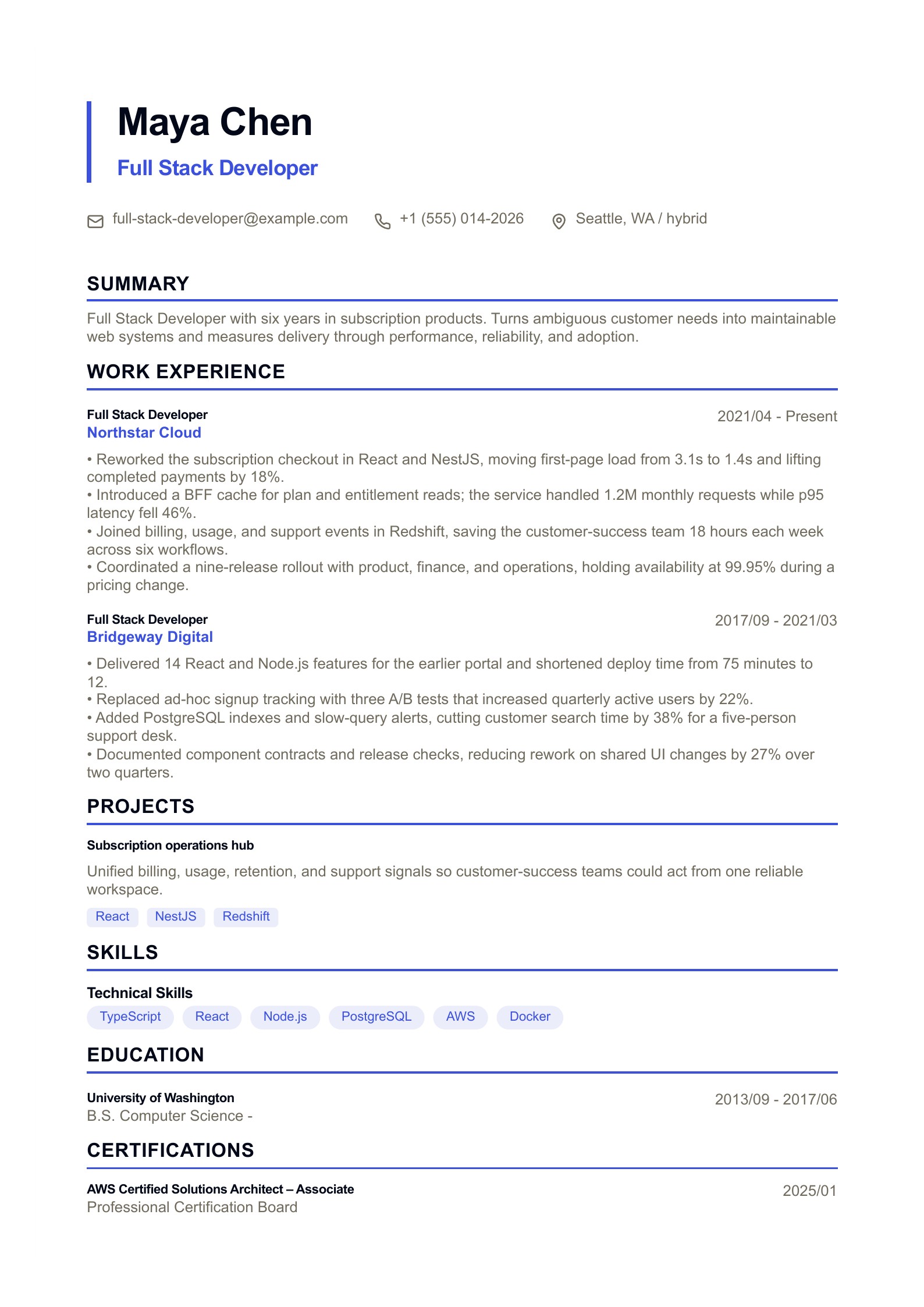
Shows end-to-end ownership from product discovery through front-end, API, and cloud delivery.
Compare 13 English examples covering front-end experience, APIs, data, cloud delivery, and measurable engineering results.
All names, companies, contact details, and metrics are fictional examples for educational use.
Start with a structure close to your experience, then replace the fictional details with evidence from your own work.
Best for: Product-focused full stack developers
Shows end-to-end ownership from product discovery through front-end, API, and cloud delivery.
Best for: Senior engineers with five or more years of experience
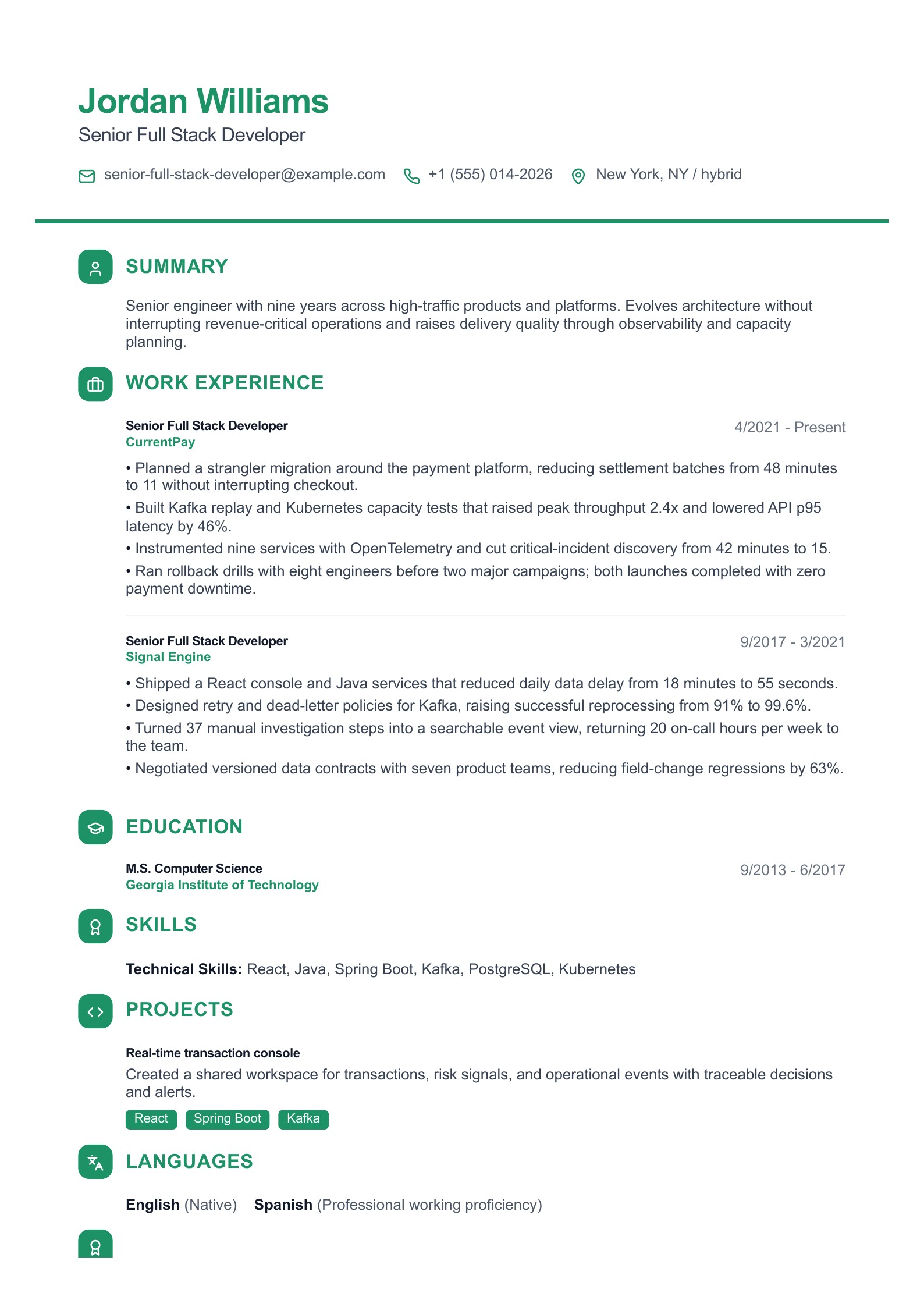
Emphasizes architecture evolution, technical decisions, reliability, and influence across teams.
Best for: Developers with one to three years of experience
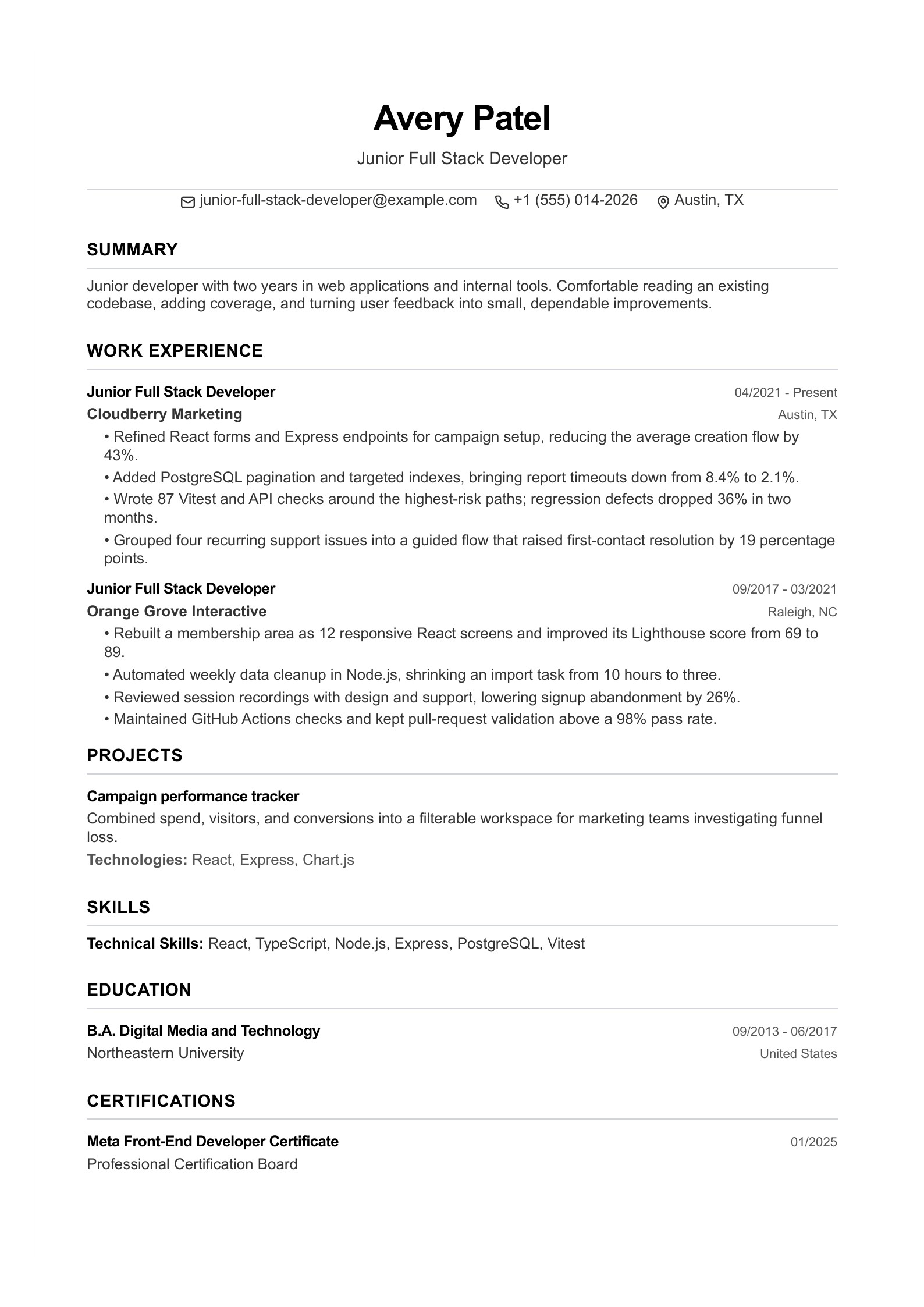
Makes practical delivery, tests, and fast understanding of an existing codebase easy to scan.
Best for: Career changers, bootcamp graduates, and first developer roles
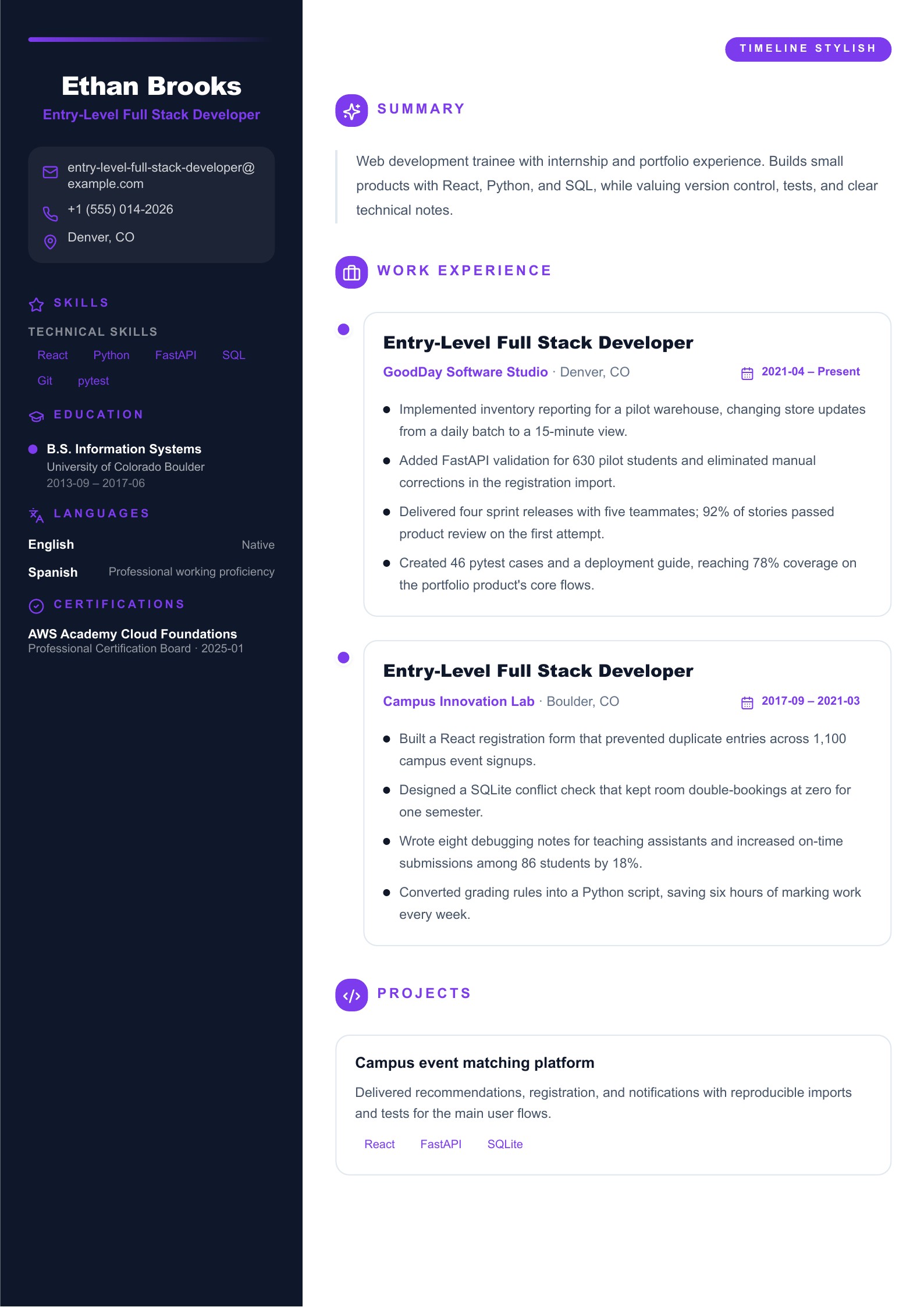
Turns training, portfolio work, internships, and early contributions into credible evidence.
Best for: Students and candidates applying for full stack internships
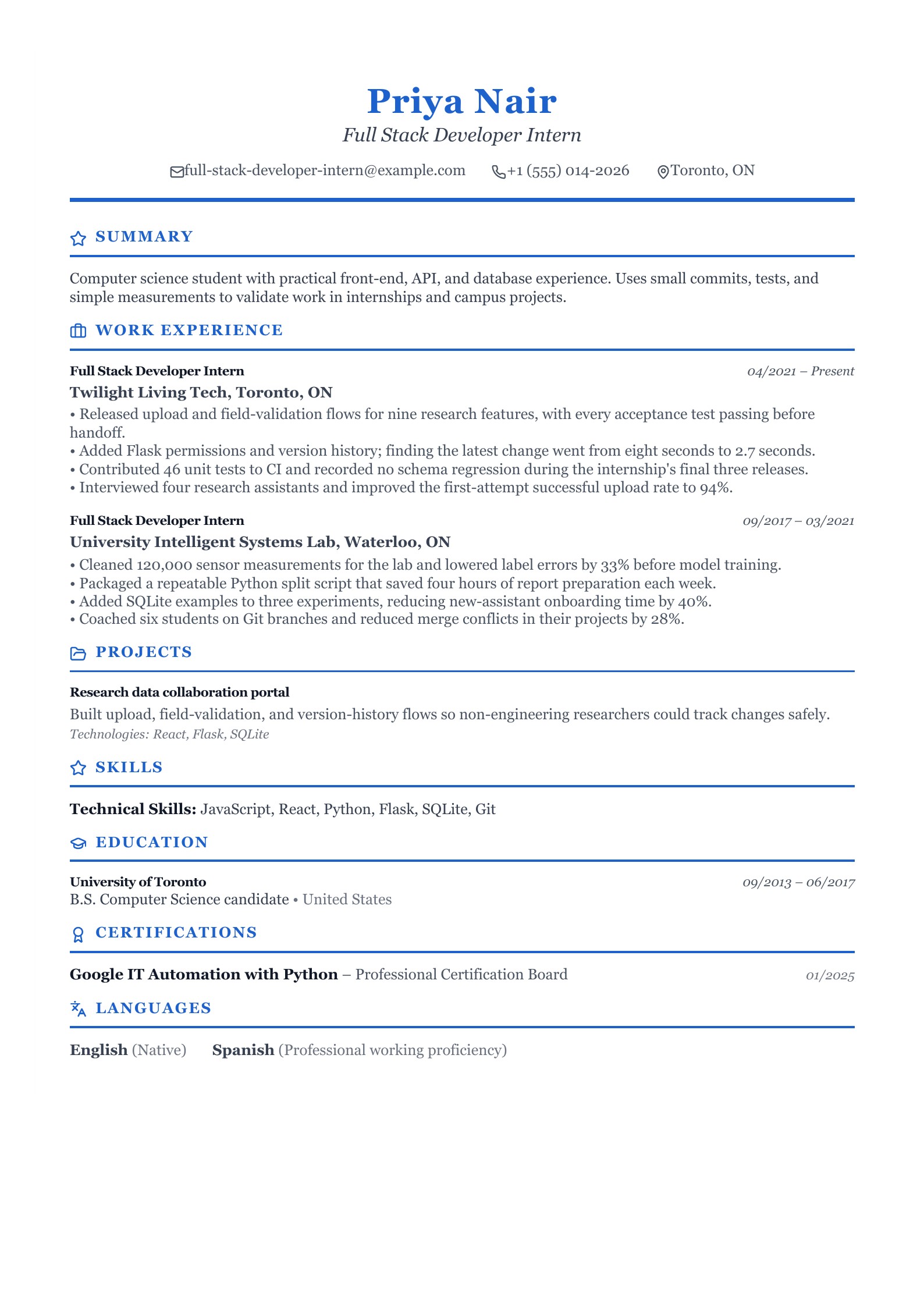
Combines coursework, research, internship delivery, and team collaboration for an early-career application.
Best for: Full stack engineers building Python-based products
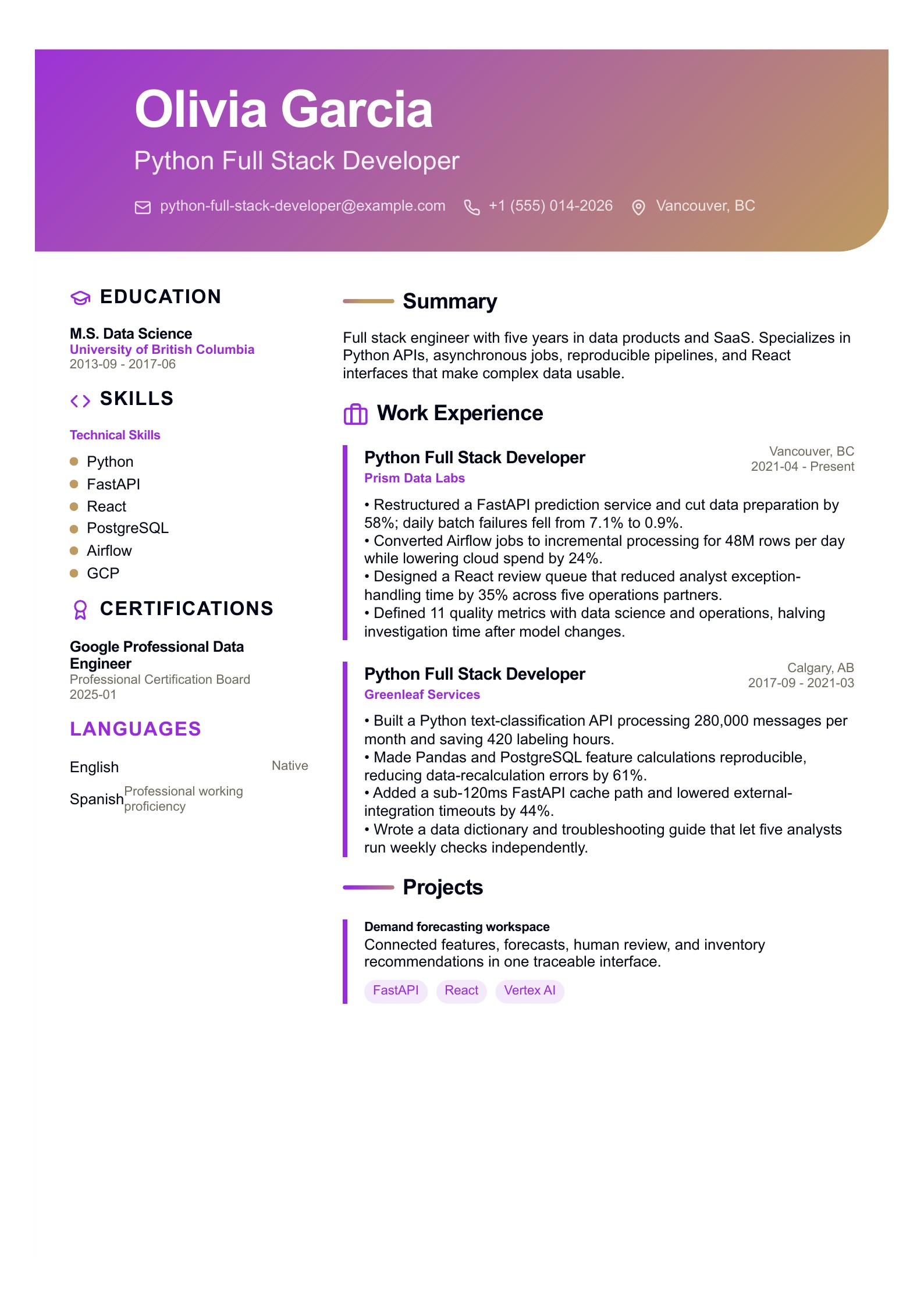
Focuses on Python services, data workflows, API design, and modern front-end integration.
Best for: Web platform, commerce, and B2C developers
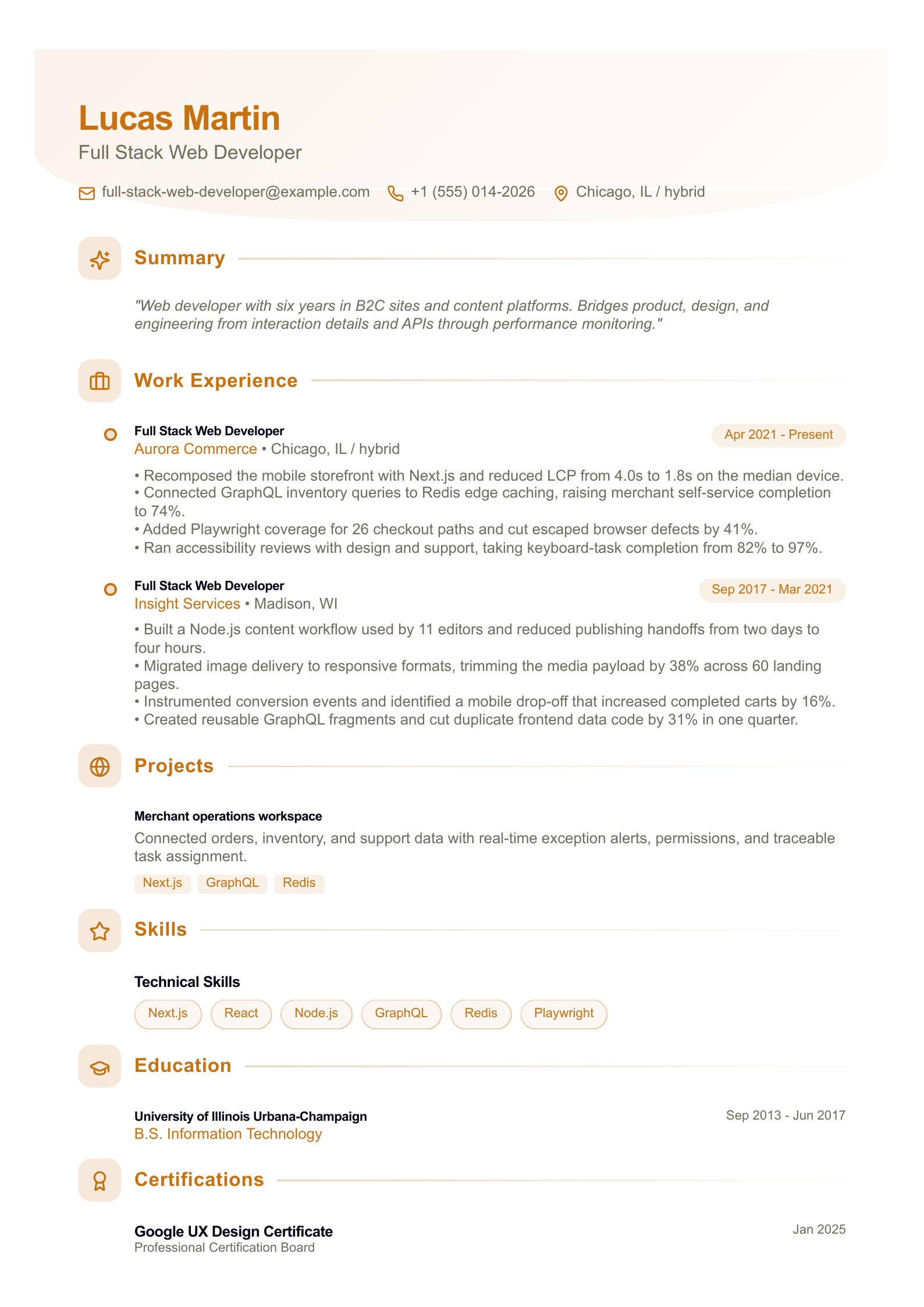
Highlights responsive web delivery, accessibility, performance, and front-end/back-end integration.
Best for: .NET, Azure, and enterprise application developers
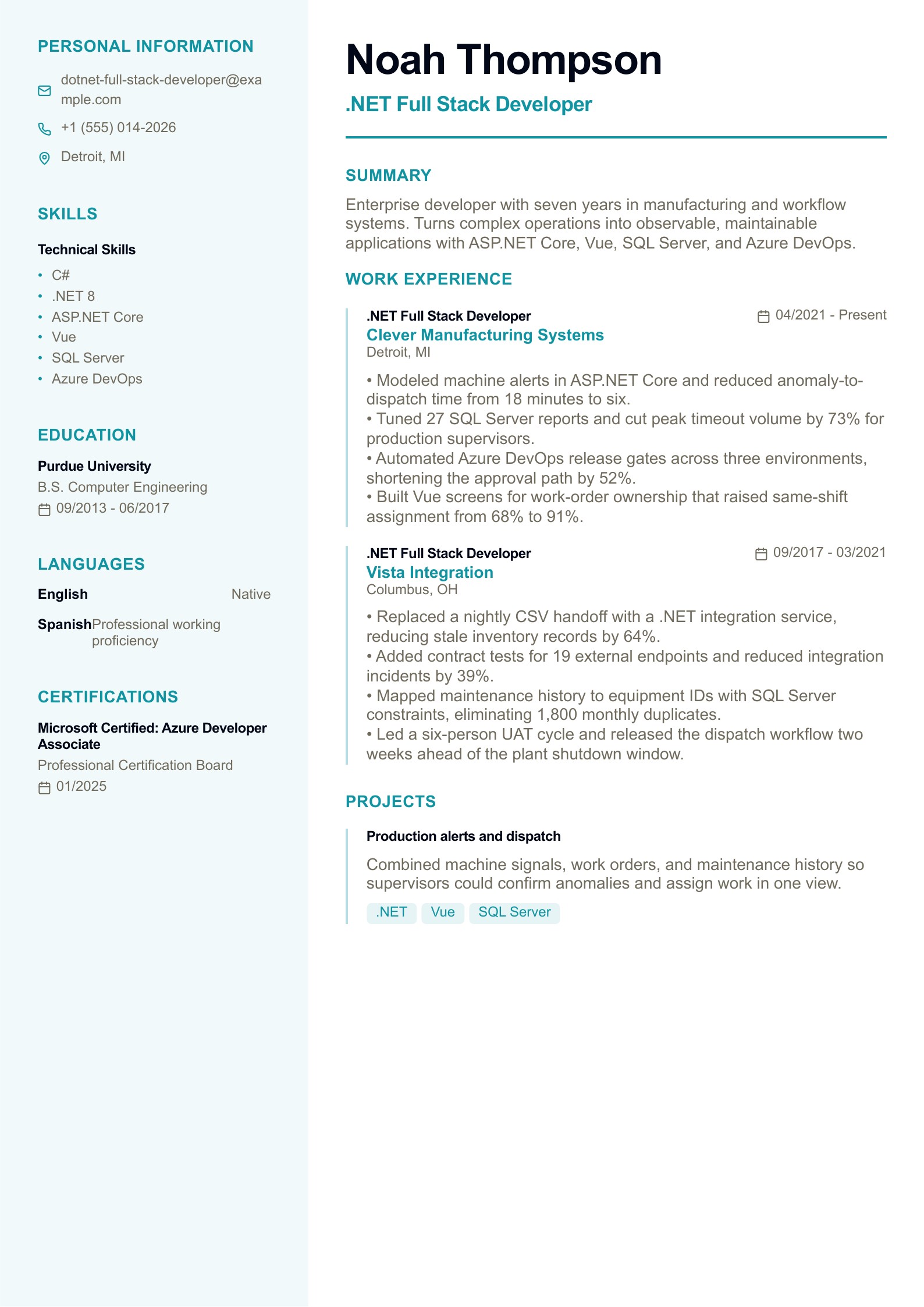
Organizes C#, ASP.NET Core, SQL Server, Azure, and enterprise-system integration results.
Best for: Angular, Java API, and enterprise front-end developers
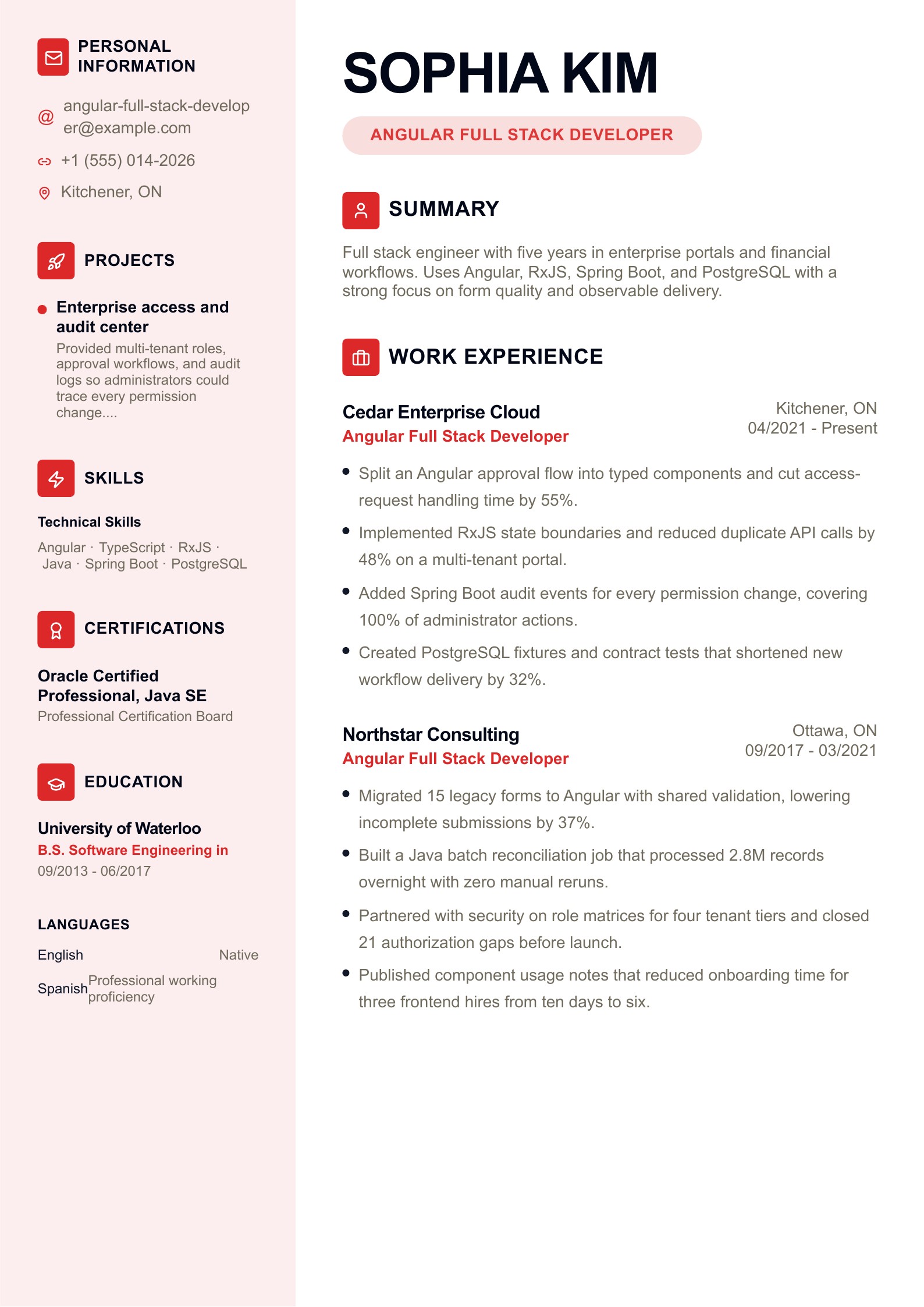
Presents Angular enterprise UI, Java APIs, component boundaries, and test automation.
Best for: Java, Spring Boot, and React full stack engineers
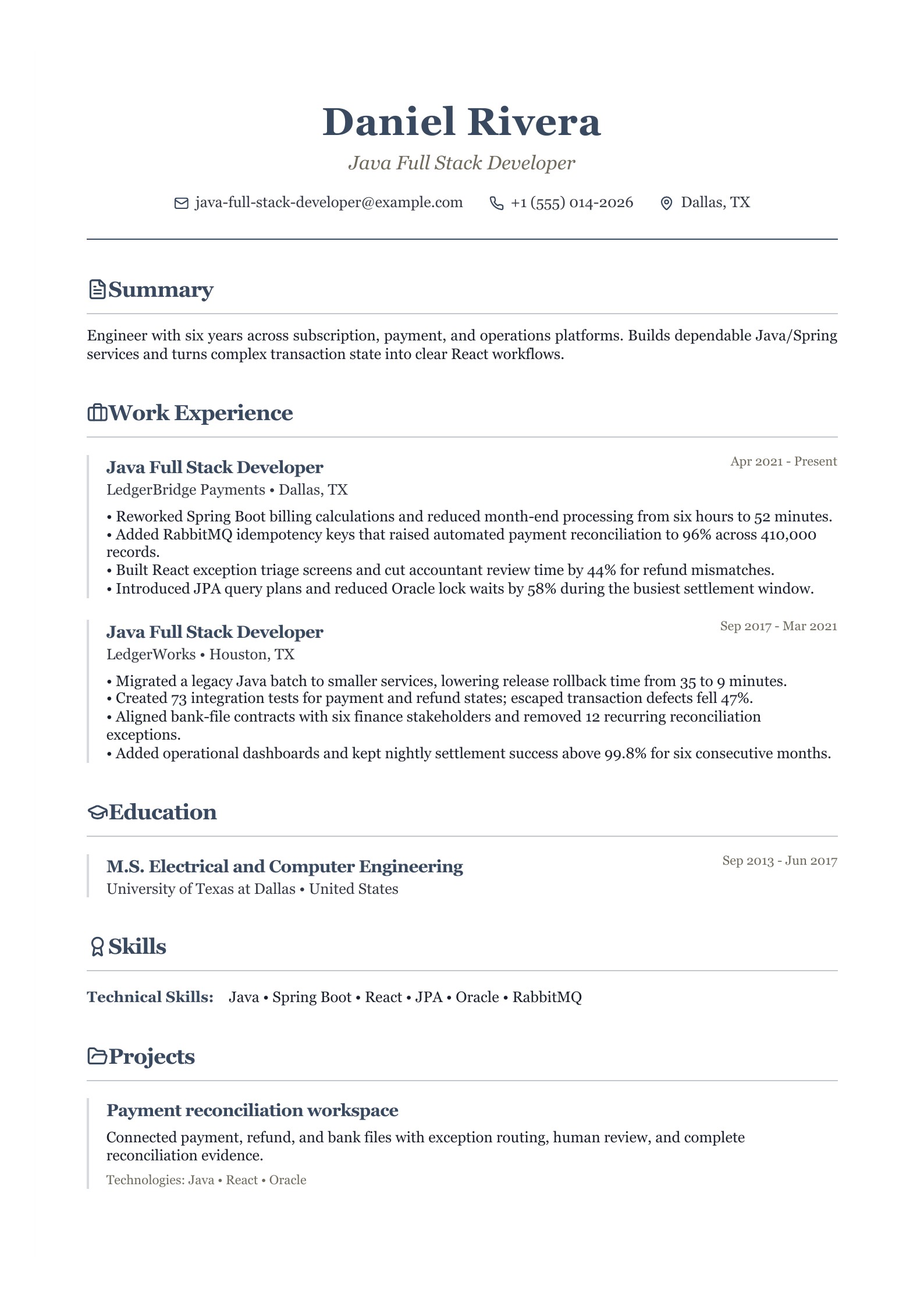
Centers on Java/Spring services, React interfaces, data consistency, and transaction workflows.
Best for: Product engineers and full stack software developers
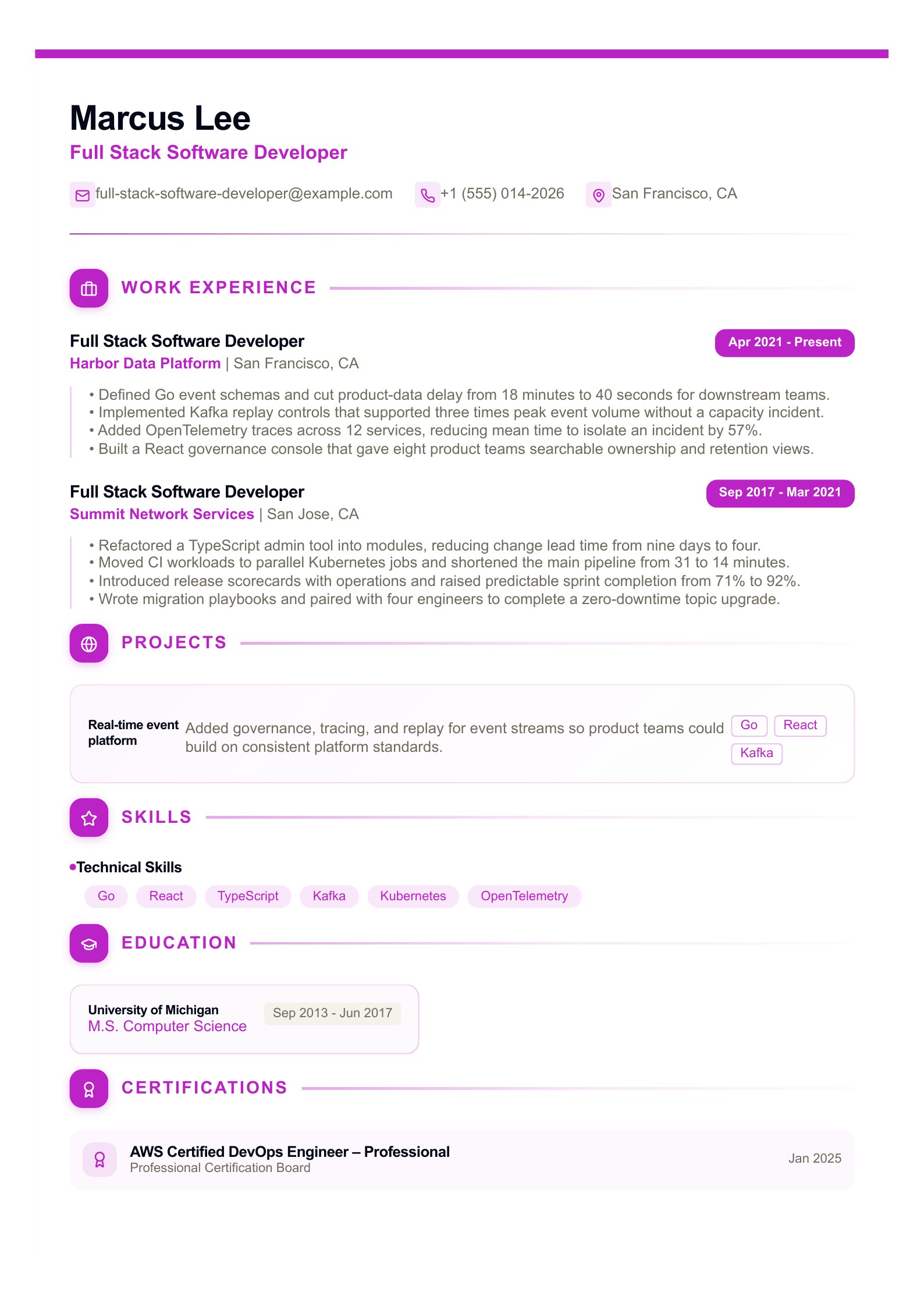
Shows product lifecycle ownership, modular design, CI/CD, and reliability engineering depth.
Best for: Enterprise applications, internal tools, and workflow automation
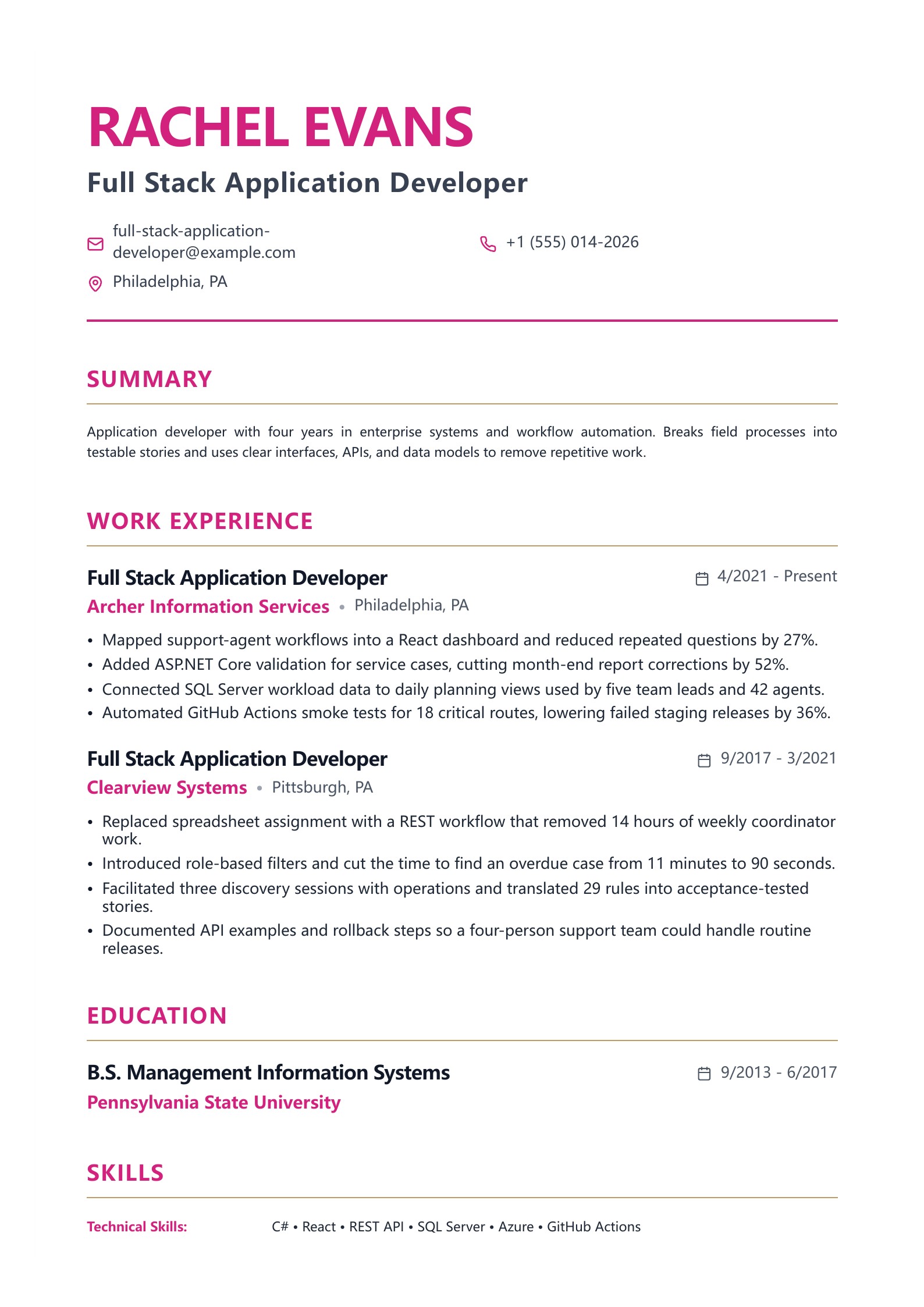
Emphasizes workflow discovery, usable internal applications, automation, and maintainability.
Best for: AI applications, chatbots, and intelligent support products
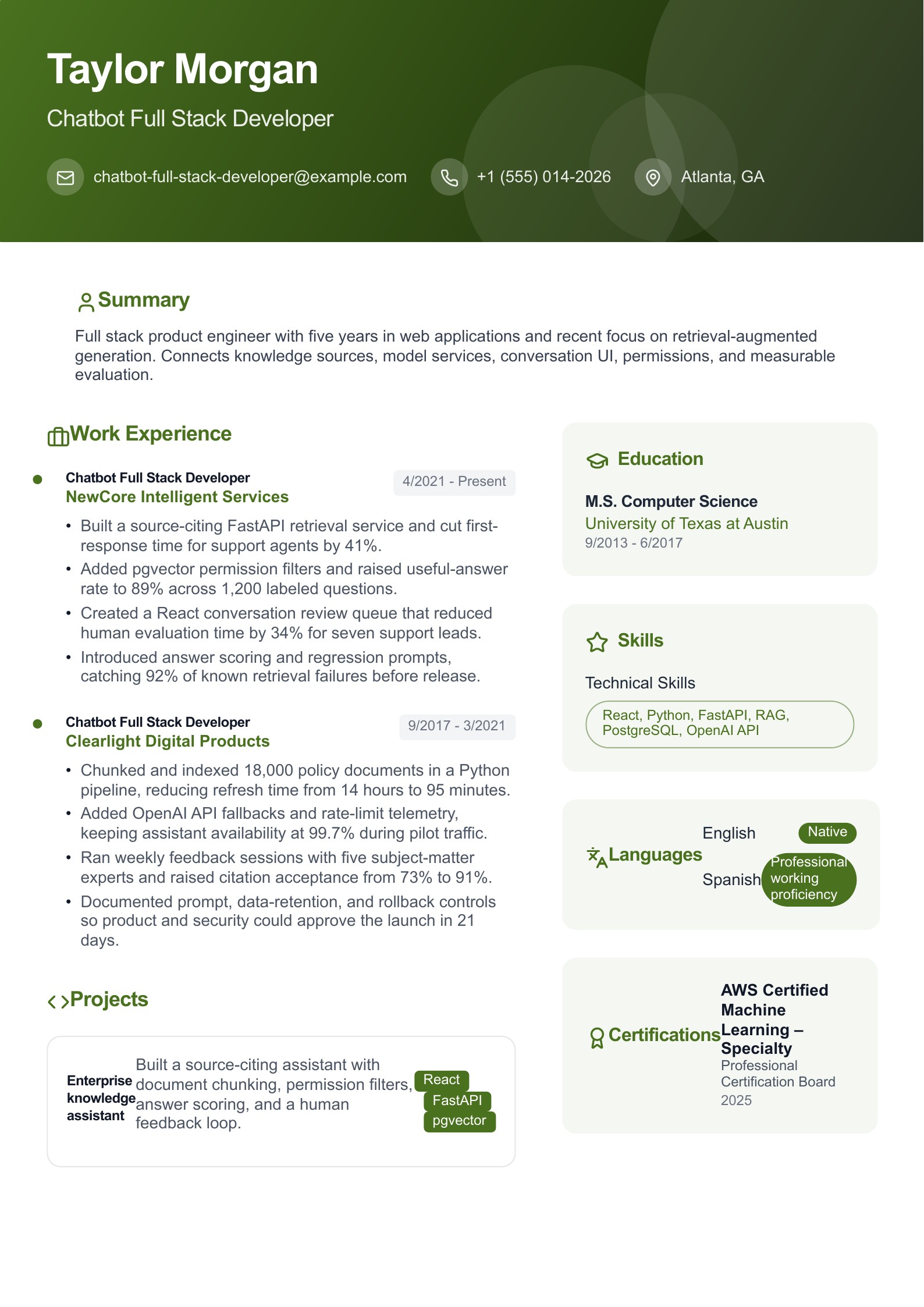
Combines conversational interfaces, RAG, backend services, permissions, and evaluation loops.
A useful full stack resume makes the scope of your ownership clear. It connects product context, technical decisions, delivery constraints, and the result that followed.
Start with a change a hiring manager can understand: faster load time, fewer failures, shorter release cycles, lower cloud cost, or more completed user actions. Then explain how the stack made that change possible.
Say whether you owned the interface, API contract, data model, tests, deployment, monitoring, or the full workflow. This is more credible than saying only that you “helped build” a product.
Include request volume, data size, team size, release cadence, legacy constraints, or reliability targets when they help the reader judge the result. Use numbers you can explain in an interview.
Show the systems you owned, the constraints you worked within, and the measurable change that followed. Mention front end, APIs, data, deployment, and operations only when the example explains your contribution.
Yes. All 13 English examples include a PDF download and a first-page JPG preview. The names, companies, contact details, and results are fictional; replace them with evidence you can explain.
Four focused bullets are enough for most roles in these examples. Start with the outcome, then add the technical approach, scale or collaboration context, and how you validated the result.
Keep a short skills section for searchability, then place the important tools in context inside each achievement. A tool is more useful when the reader can see what it helped you change.
Use internships, coursework, portfolio products, freelance work, or operational roles with technical ownership. Include users, test coverage, delivery scope, and measurable improvements rather than apologizing for a shorter history.
Yes. Keep the underlying evidence, but move the most relevant stack and outcomes toward the top. Mirror the job description's terminology only when it accurately describes work you have done.